“‘Here it is,’ he said, and waved his hands towards the water below. A soft glow shone from the reflections on the lake bathing them all in light. ‘…a Luminous Stone That Lights the Night.’”—When the Sea Turned to Silver, by Grace Lin
K. Partridge: Movement Director
Luscinda L. Dickey: Dancer
Antonel Neculai: Drone Footage
Carrie Leigh Dickey: Costume and Hair, Cinematographer and Video Editor
The Inspiration:
Are we up or down? Here or there? Then or now? Asleep or awake? Conscious or subconscious? Are we really floating somewhere in between? Surrealism is full of questions. The answers always depend on your perspective.
In Grace Lin’s book When the Sea Turned to Silver, Pinmei, the shy grand-daughter of a story teller, and Yishan, a young boy with immortal wisdom, journey to the bottom of the ocean in search of the tear of a goddess: a “Luminous Stone That Lights the Night.” The Sea King takes them across a bridge—one that “…stretched and stretched only to disappear…”
“‘Are we walking over the sea?’ Pinmei asked faintly.
“‘This is the Heavenly Lake,’ the Sea King told her. ‘The immortals of the sky call it the Celestial River and you mortals call it the Starry River, but here we call it the Heavenly Lake. I suppose to us at Sea Bottom, it seems more the size of a lake than a river.’
“‘But the Starry River is in the sky,’ Pinmei said, shaking her head in confusion. ‘It’s up high. This is below!’
“The Sea King nodded. ‘Our worlds connect here,’ he said. ‘The bottom of the Heavenly Lake is your sky.’
“…After another long pause, the Sea King stopped and brought them to the edge of the bridge.
“‘Here it is,’ he said, and waved his hands towards the water below. A soft glow shone from the reflections on the lake bathing them all in light. ‘…a Luminous Stone That Lights the Night.’
Or, Pinmei thought as she stared downward, the moon.”
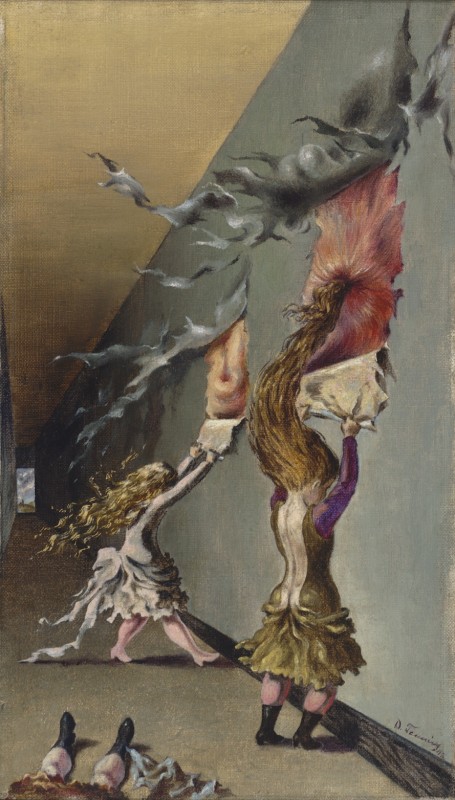
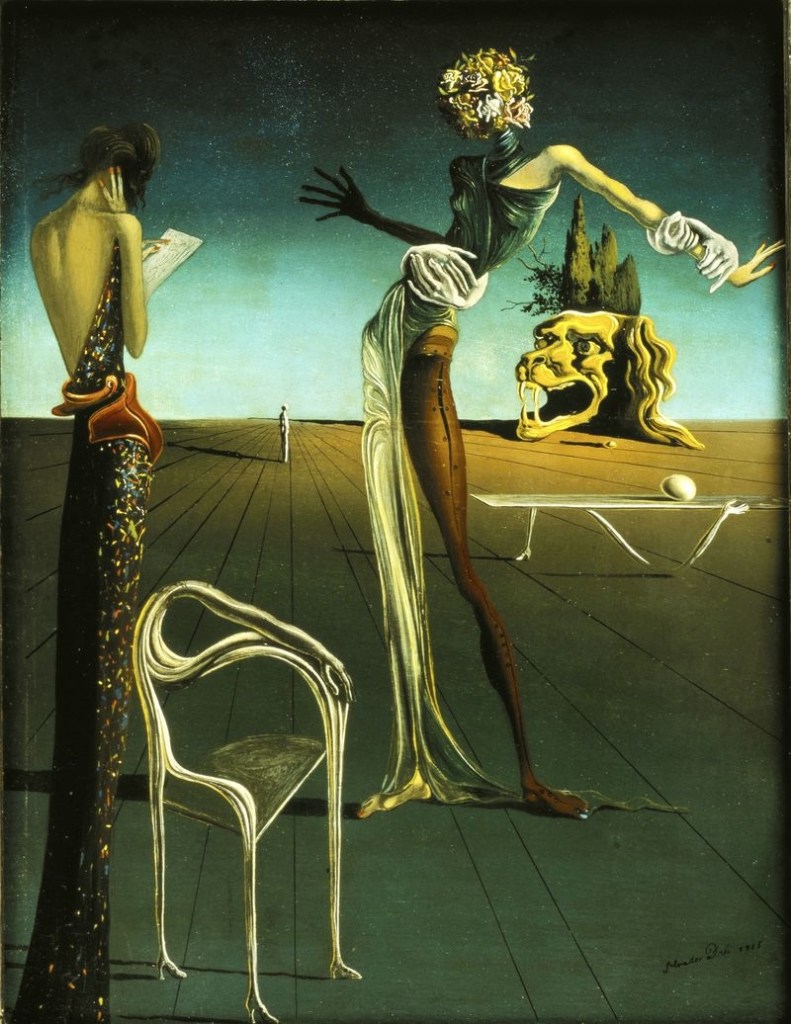
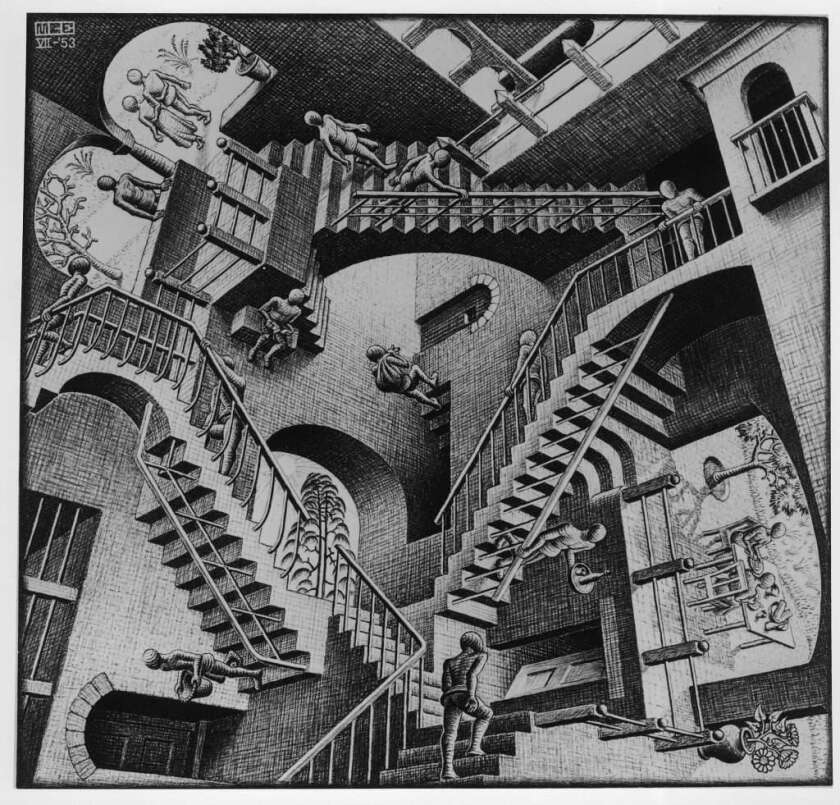
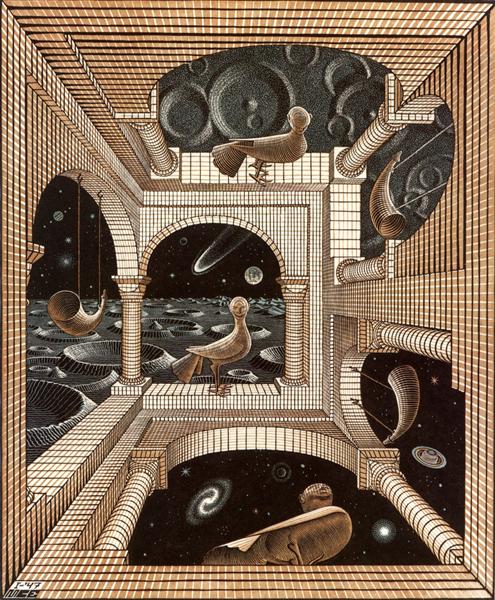
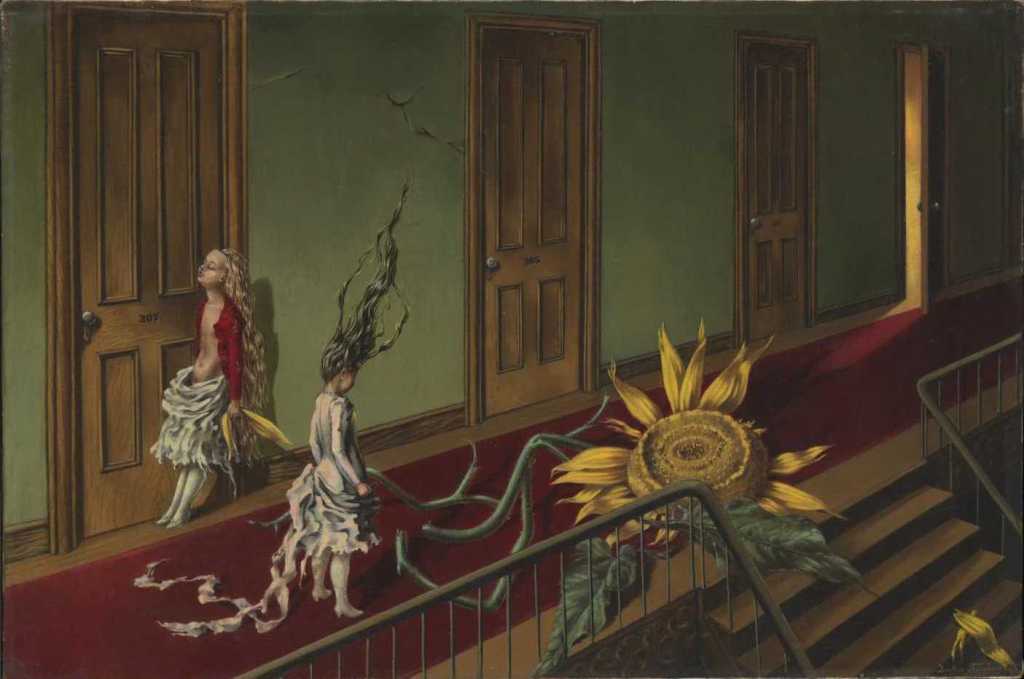
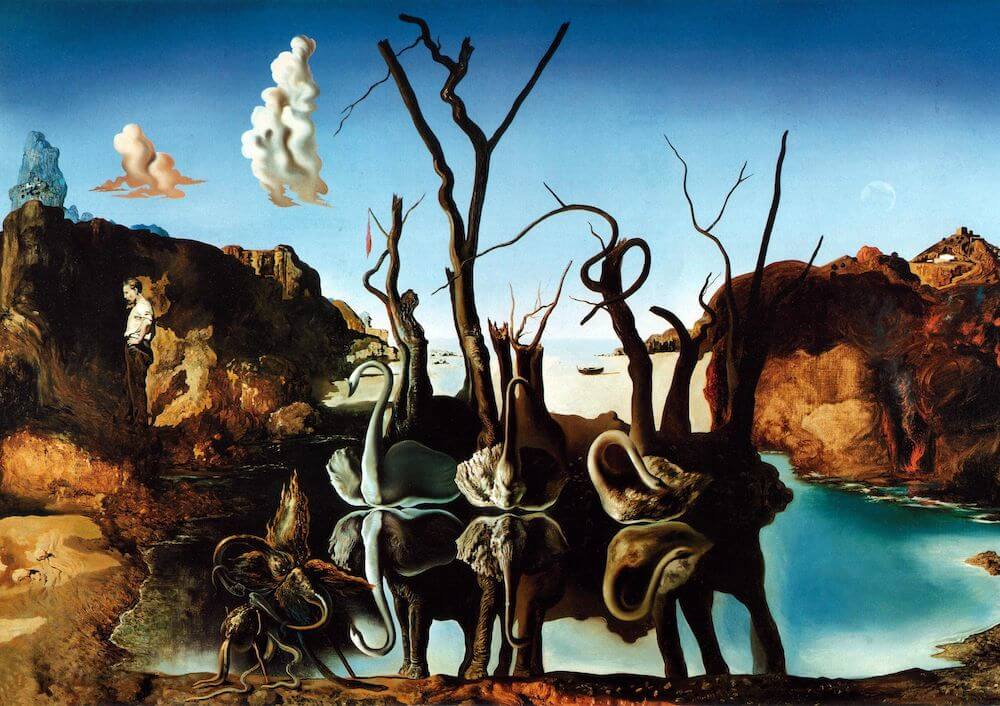
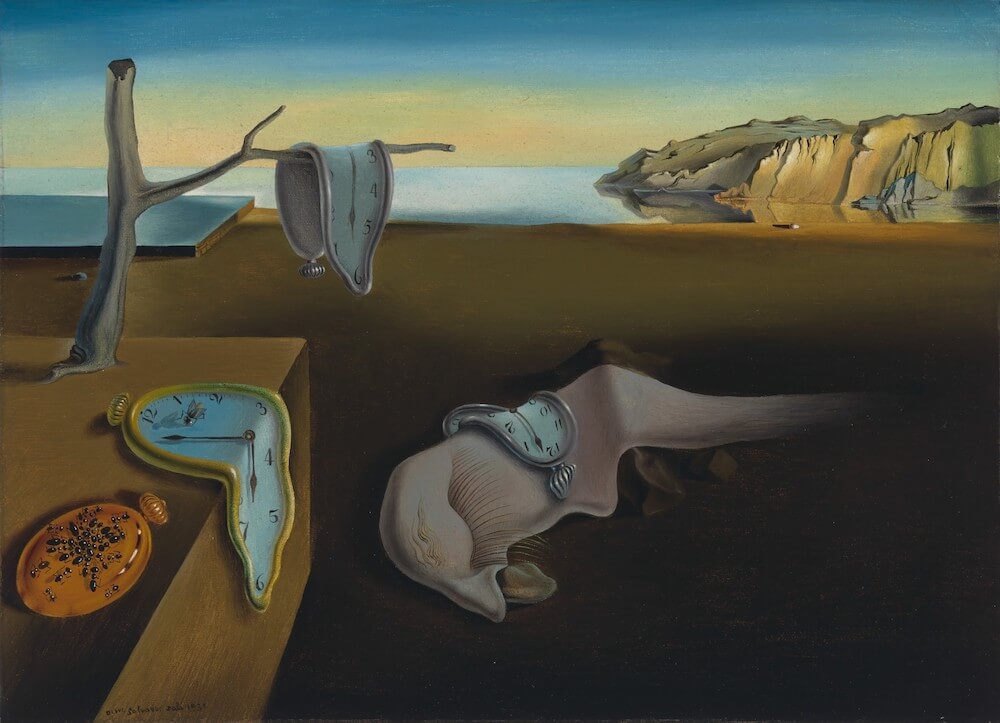
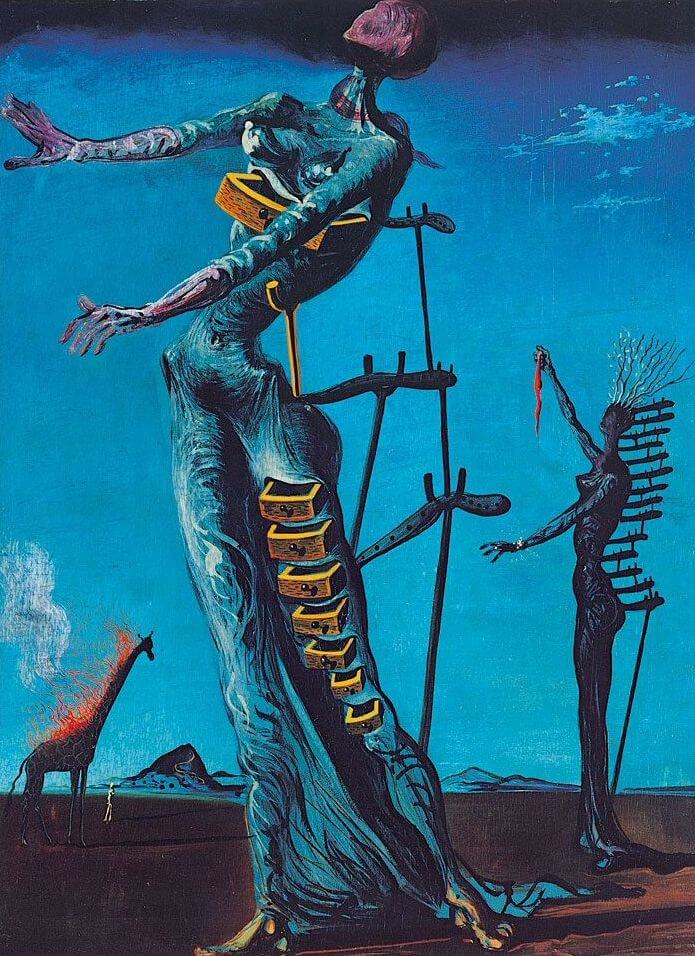
The Moon-dancer: Waxing Gibbous was inspired by the works of Surrealist artists Salvador Dali, M. C. Escher, and Dorothea Tanning.

The Music:
Erik Satie’s Gymnopédie No. 1—Lent et douloureux, as orchestrated by Claude Debussy.
The Composer and the Orchestrater:
After leaving his position at Le Chat Noir, Erik Satie became second pianist at Auberge du Clou. It was there, in 1890, that he first met Claude Debussy. Finding that they shared a passion for experimental composition, the two bohemians struck up a relationship that would last for years. Can you imagine an afternoon at Debussy’s flat—a quirky place, with a balcony only big enough for two or three flower pots, high up in the Paris sky? I can see Debussy perched at his rather out-of-tune old piano and exuberantly playing Satie his newest idea, as the latter leans back in a rickety arm chair while sipping happily on a glass of cheap and slightly dusty wine. It was in 1897 that Debussy, whose popularity was growing as Satie’s was waning, helped put his friend back into the public eye by orchestrating two of the now famous Gymnopédies.
 Luscinda L. Dickey