Dance

The Moon-dancer: Waning Gibbous

“You dance love, and you dance joy, and you dance dreams. And I know if I can make you smile by jumping over a couple of couches or running through a rainstorm, then I’ll be very glad to be a song and dance man.” — Gene Kelly

K. Partridge: Movement Director
Luscinda L. Dickey: Dancer and Painter
Carrie Leigh Dickey: Costume and Hair, Cinematographer and Video Editor

The Inspiration:

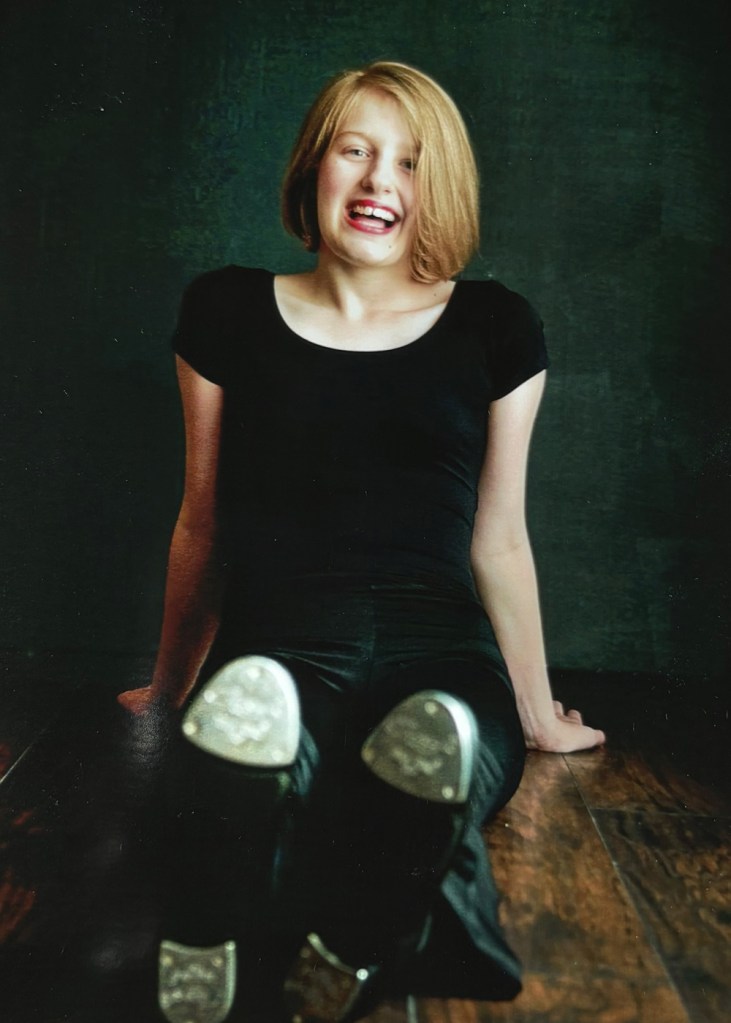
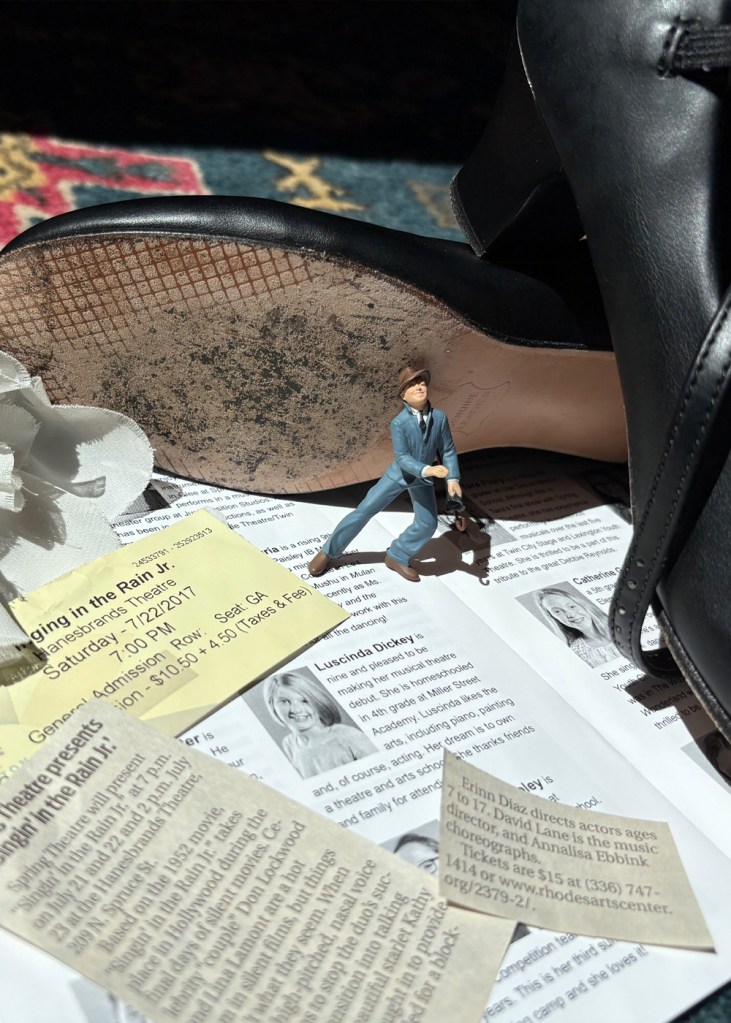
It was the summer of 2016. I was newly nine years old. And for this monumental birthday, my parents had given me the greatest present one can give an aspiring thespian: THEATRE!! And not just any theatre—MUSICAL THEATRE. I was to have my first official experience of the limelight in a summer camp production with Spring Theatre. Yes, Mommy and Daddy paid for my spot, but I still had to AUDITION (three cheers for “Somewhere Over the Rainbow”!). I had my name on a CAST LIST (my character had the first lines in the show too, thank you very kindly!). I had an authentic MTI SCRIPT, my very own CHARACTER SHOES, special COSTUME FITTINGS, and (of course!) two weeks of VERY SERIOUS REHEARSALS for proving my skills as a TRIPLE-THREAT. That’s right, sweetheart! I was one of those magnificent nine-year-olds who could act and sing and dance like Gene Kelly! Or that’s what I thought. At first. For maybe a day. Then, I met that little awkward corner of the world called “Group Two.” Group Two is the place you go when the choreographer says: “arms out and chassé right!” and you just… stand there… and then go left.

Now, not even the royalty in Group One were absolute dance-masters (though they sure seemed like it to me!). We all had to take bona fide lessons at Juxtaposition Studios, now Juxtaposition Fine Arts. My mom was waiting outside on this first lesson day when her calm walk around the gravel lot was interrupted by an unsettling sound. I quote her elegant turn of thought as follows: “Oh my gosh, what’s that?? There’s a stampede of horses about to burst through the wall!” Of course, it wasn’t horses. It was just 20 young ones learning how to “flap.” It was the sound of tap dance: a magical artform in which the dancer both moves to music and makes music.

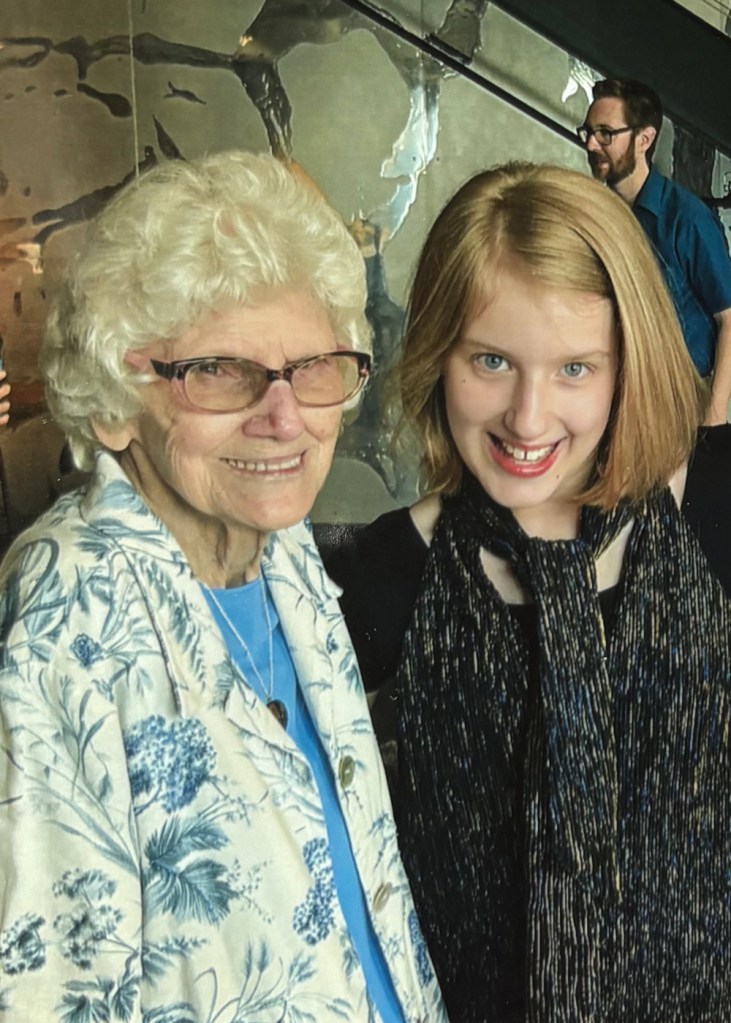
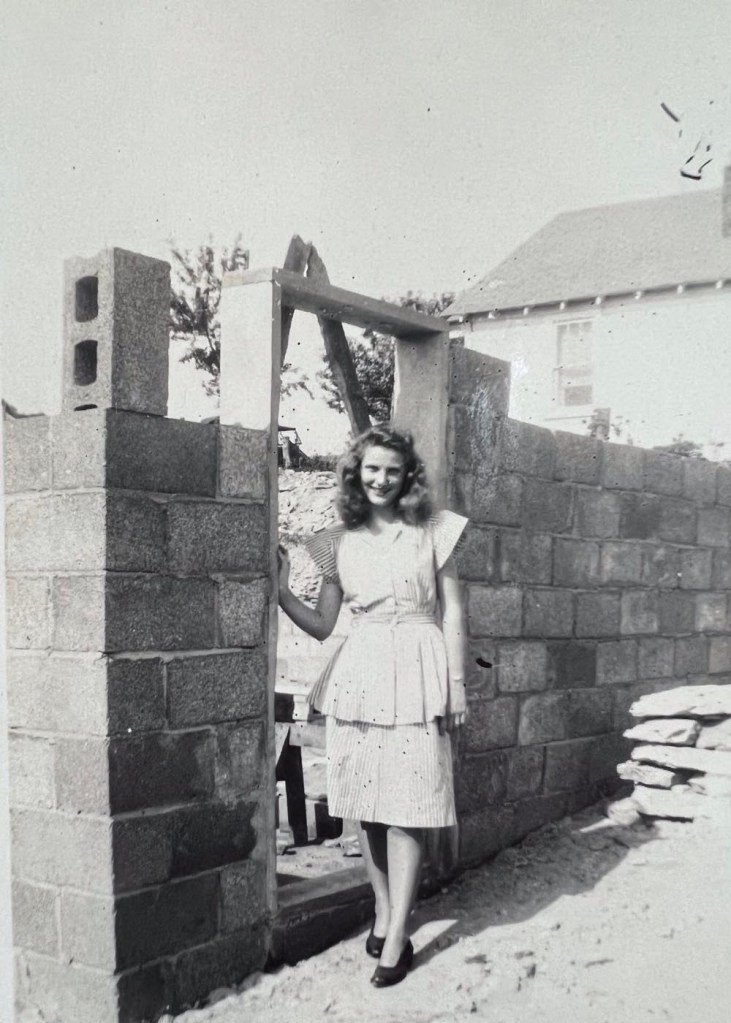
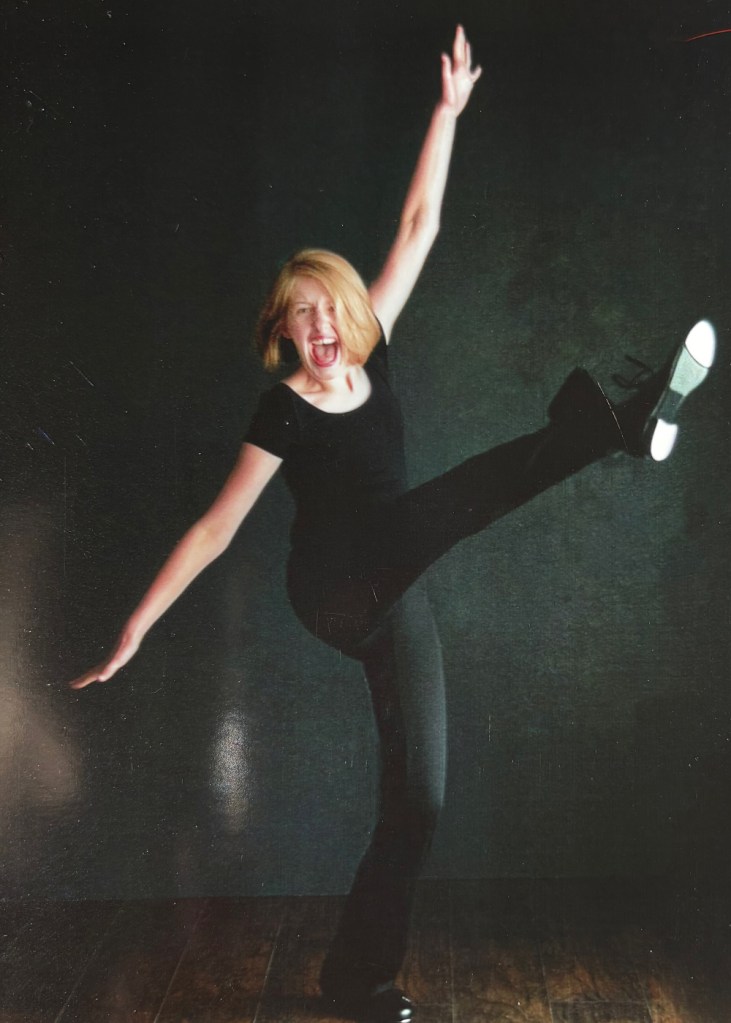
By the end of my summer camp run, I had developed a fierce adoration for tap. I was soon back at Juxtaposition for a weekly tap and musical theatre class. I gobbled it up while simultaneously feeling like a strange, leggy stomper who stood heads above her classmates. My teacher, Ms. K., and my parents came up with a new plan: I was to take private lessons with tap as my focus. That was it! I was off and flying. I still might not have known exactly what to do with my arms (“They looked like wiggling ribbons!” my mom says), and “left and right” remained an enigma, yet I was in my element. My nine-year-old showcase dance: tap! My ten-year-old showcase dance: tap! The dance we recorded with eleven-year-old me in a stripy jumpsuit: tap—obviously! And I had such a blast tapping that everyone watching me had a blast too. I especially loved to tap for my great-grandmother who could still do a brilliant Charleston at 90 years old. Even when she was not there, I would imagine she was and dance like I’d dance for her. I still do that to this day.

I started to outgrow my last pair of black Capezio tap shoes around 2020. We kept saying we’d buy new ones, but the time was never right. Besides, I had discovered contemporary and interpretive dance and was wrapped up in exploring this new way of expression. Almost four years passed. I was deep in my series of “The Moon-dancer.” And, still, I kept saying: “I will rediscover tap. I’ve got to. One of my next dances WILL be tap.”

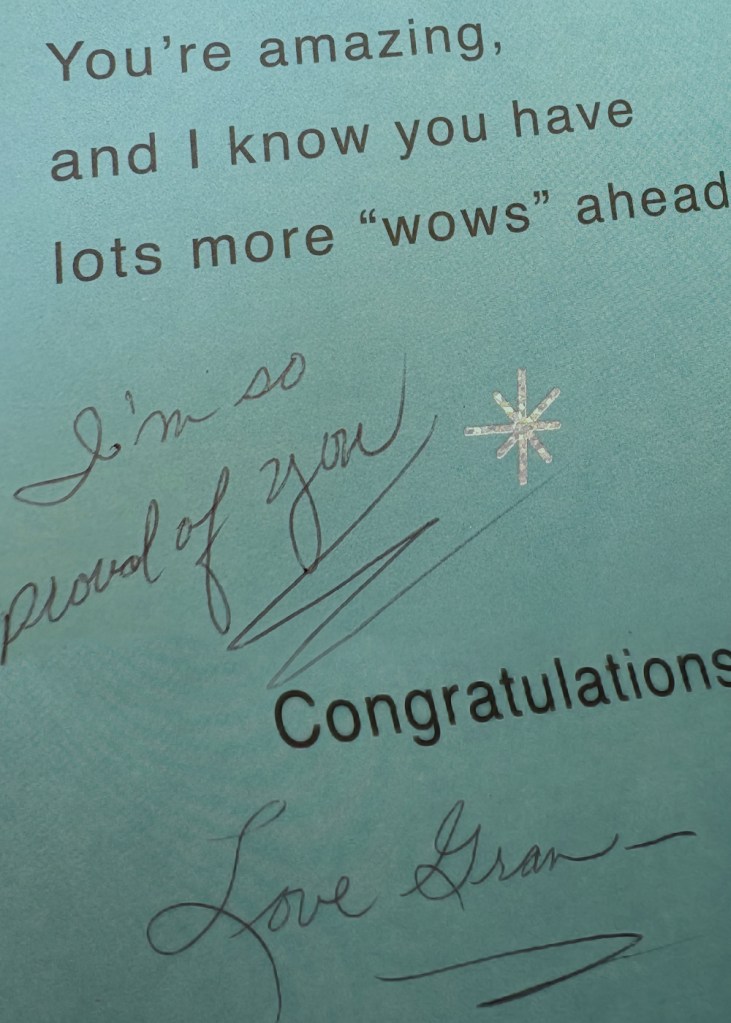
The latest installment of “The Moon-dancer” is for the phase of the waning gibbous. The waning gibbous is symbolic of reflection, gratitude, and release. It embodies a time when we look both deep inside ourselves at who we are becoming and out with thanksgiving to the people who love us, teach us, and journey with us along the way. We remember. And then we let go and give back. “The Moon-dancer: Waning Gibbous” was recorded on May 1, 2026, just 20 days before my eighteenth birthday—the day I officially step out into the limelight of life. To me, this dance is a little, enchanting waltz through memory and a gift back.

And it’s tap. Obviously.

“The Moon-dancer: Waning Gibbous” premiered to the public on June 13, 2026 at Luscinda’s Senior Recital and High School Graduation.


The Music:
Scott Joplin’s “Bethena, A Concert Waltz”

Reflections

Strings of Perspective

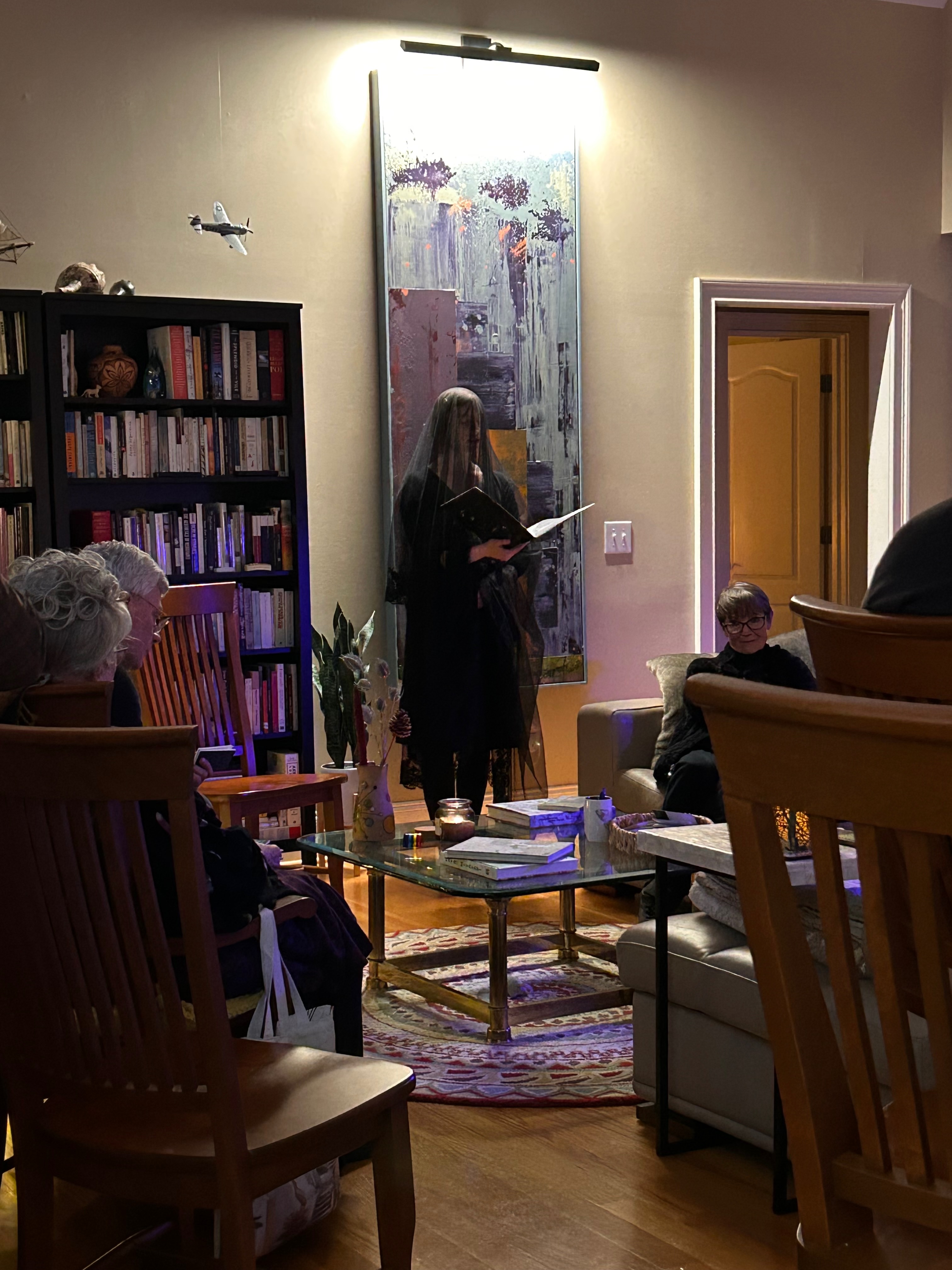
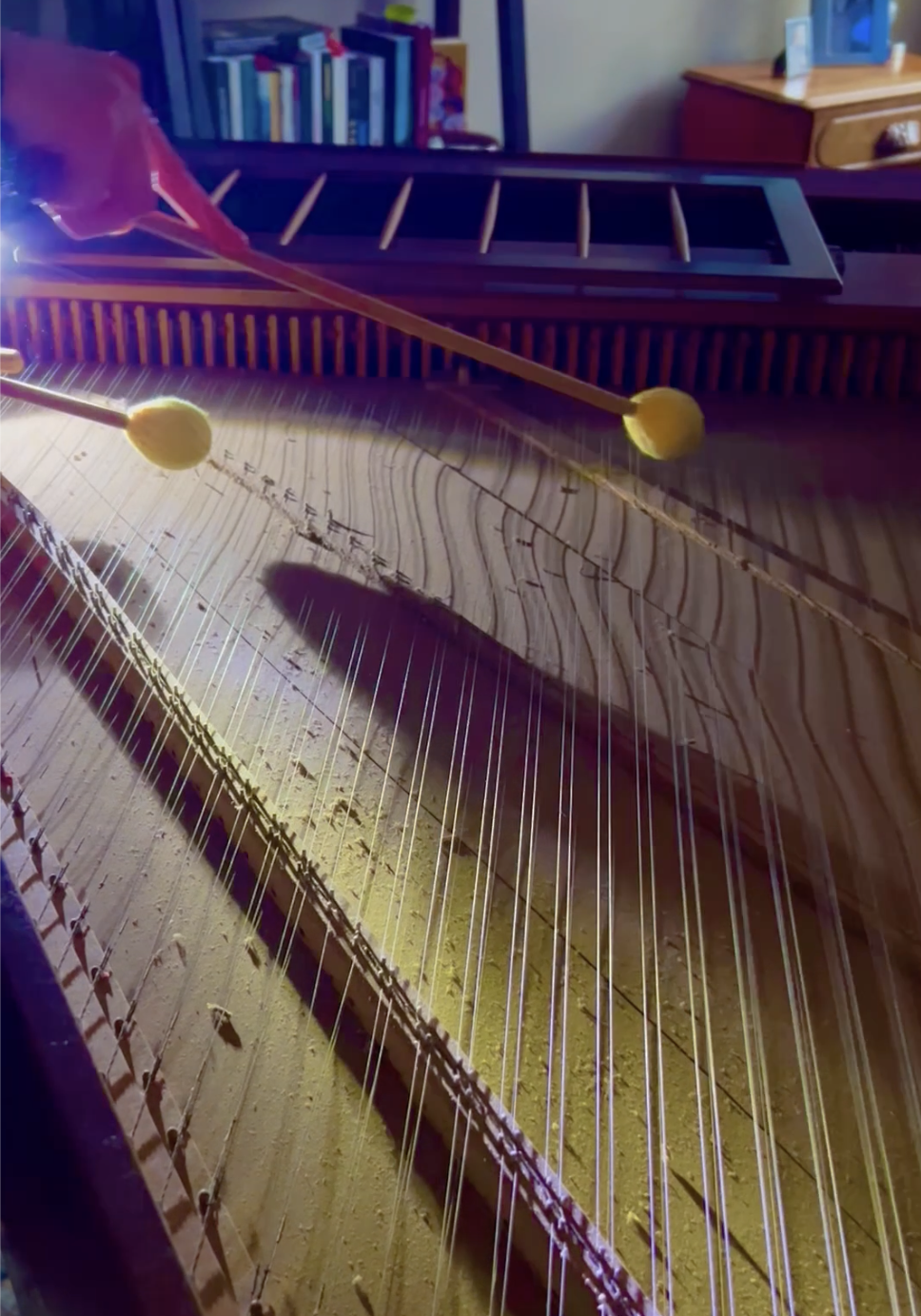
I stood among the silent audience in the dim living room. The words I had spoken were fading. I turned, emerging from my long, black vail. “They call up from below, from afar into the distance.” Slowly, I walked to the room where the haunted harpsichord waited. I breathed. I lifted the mallets; I reached inside. And I listened.

I was ten when I stopped to consider what lays inside of those creatures we call Keyboard Instruments. That was when I met a “wizard” with round-rimmed glasses and a little magic bag: Mr. Al. Mr. Al arrived in the wake of a very old Schubert piano. 

The Schubert Piano Company was headed by a Mr. Duffy, and it revolutionized the American music scene. (Next time you hear the melodious rattle of a honky-tonk, nod wisely, and say: “Ah, yes! A Schubert!”) Our new Schubert was not of the bar-side sort—rather it was an ebony parlor grand—but you couldn’t tell so from the disgruntled tuners who came and went only to make the piano sound even sorrier. Those tuners were obviously sorry for themselves and for my family’s rebellious estate sale find! All tuners, that was, except for Mr. Al. This Steinway technician sat before our Schubert, played some jazz, smiled, said “this is a good piano,” opened his little magic bag, and proceeded to tune by ear while little me watched in awe. 

Mr. Al knew how to make a piano sing! He explained everything about their insides: why there are three strings in the treble, why a piano breathes in and out like we do, how the pedals work, and how to listen with him to the stretching and warping of pitch. Finally, one day, Mr. Al said the piano’s action needed adjustment so my tiny fingers would not have to work as hard. So, to my amazement, he simply took the keyboard off. Before me lay the keys, the hammers, and the toothy things which connect them. Left inside the piano was the empty crevice where they all lived. And, deep within, was the dead moth who lived there too.

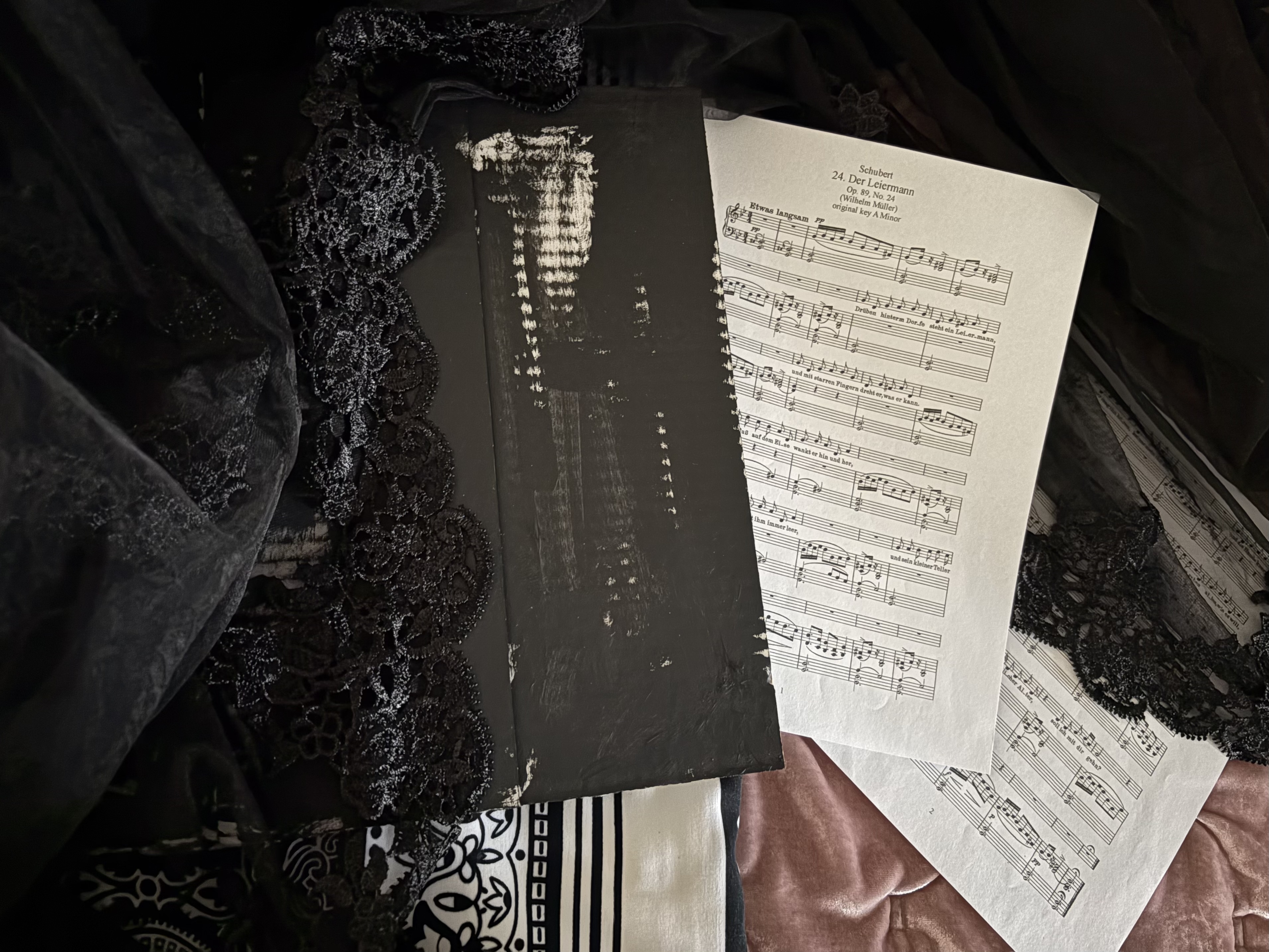
Years later, in late 2025, I was in the home of Dr. Heidi Hart. Ms. Heidi—a masterful arts researcher, curator, and instructor—had invited me to participate in an evening of Hausmusik: an “informal musical tradition from Germany and Austria, where friends still gather to listen, play, and sing with minimal rehearsal,” as Ms. Heidi writes. The musik to be performed was from Franz Schubert’s song cycle Winterreise or The Winter’s Journey. I was to act as ghost narrator: haunting the house in stoic black and reading aloud translated fragments of Elfriede Jelinek’s theatre piece Winterreise, “a meditation on various forms of exile, loss, and melting ice.” 

And, during the final song “Der Leiermann,” I was to play Ms. Heidi’s decayed East German harpsichord—from the inside. I remember the fascinating moment when I first met the harpsichord: the keys stuck and unstuck spontaneously with the weather. The strings were brittle yet strong—think of silvery, unbreakable spider’s silk. And, here too, history’s invisible spiders had captured dead moths on the cracking soundboard.

Ms. Heidi showed me how to stroke the harpsichord’s strings with soft mallets and pick them with wood. When I did, the bass tremored and echoed, the edges crackled with disjointed chromaticism, and the higher register gave piercing cries like the whistle of wind in treetops. 

Strings of perspectives: that evening of Hausmusik was more experience than performance. The ghost I embodied moved in unexpected ways. The words evolved in meaning as I read them. The sounds came more alive when I stopped to listen.

Winterreise tells the journey of a wanderer with a mangled heart who says good night to his lost love one last time and embarks across a barren winter landscape. He berates his tears for freezing on his cheeks when he is burning inside. He comes by the linden tree which bloomed in his past but does not stop there for peace. He carves his love’s name on a frozen lake like marks on a gravestone. Perused by crows, he enters a sleeping village but, yet again, excepts no rest. At last, as three phantom suns set, he comes across a bare foot old man playing a hurdy-gurdy. And our wanderer is broken to the point of seeing and hearing what no one else does.

“No one wants to listen, 
no one looks at him, 
and the dogs growl 
around the old man.

“And he lets everything go on 
as it will;
he plays, and his hurdy-gurdy
never stops.”

Who is this old man? Is he death like many believe? And if so, does death really mean what we believe it does? Isn’t winter a death? Isn’t winter also a re-birth? Don’t we all experience winters? Don’t they force us to pause and change perspective—like seeing a piano from the inside and stroking a harpsichord’s strings? What pains have I suppressed that, in fact, make me stronger? What ever-present wonders have I ignored? Are we holding our hands in front of our eyes or peering with curiosity through our fingers? What are we missing when we don’t stop to listen?

We all will freeze. But will we stay numb? Or will we emerge and bloom?

I hope we choose to bloom.

“Those who come after, who can know nothing, move out of the light they spread with their flashlights, out of the cone of light, only into the darkness. And the strangers, the dead, who were torn out of the darkness of their childhood and were allowed to keep nothing, were not allowed to keep anything, not even their teeth, not their glasses, not their hair, not their dental fillings, not their suitcases … nothing, nothing, they preceded us into where we are today … But at the same time, we. We cut into our tree bark of memory.

The words of love.”

— Elfriede Jelinek, Translated and Fragmented by Heidi Hart

Text of “Der Leiermann” by Wilhelm Müller translated by Richard Wigmore.

Dance

The Moon-dancer: Solar Eclipse

A piece of sky beside the crescent sun was detaching. It was a loosened circle of evening sky, suddenly lighted from the back. It was an abrupt black body out of nowhere; it was a flat disk; it was almost over the sun. That is when there were screams. At once this disk of sky slid over the sun like a lid. The sky snapped over the sun like a lens cover… The eyes dried, the arteries drained, the lungs hushed. There was no world. We were the world’s dead people rotating and orbiting around and around, embedded in the planet’s crust, while the earth rolled down. — Annie Dillard, “Total Eclipse.”

K. Partridge: Movement Director
Luscinda L. Dickey: Dancer
Carrie Leigh Dickey: Costume and Hair, Cinematographer and Video Editor

The Inspiration:

solar eclipse noun
: an eclipse of the sun by moon

In other words, when the lesser of the great lights overcomes the mightier. Bringing darkness. Darkness and stillness where there should be brilliance.

The moon is bound to Earth, as most of us are. It is even thought to be made of Earth: of rock and metal and dust—just as we are all made of Earth. The moon has become a symbol of our loves, our fears, our dreams, our hopes, our time, our memories, our changes, our unknowns, and even of our certainties. The moon will always pass through its phases: the tides will always come in and go out. Yet truly, the moon makes no light: it merely reflects the sun.

The sun is not bound to Earth or made of Earth—Earth is bound to the sun. The sun is fire and fusion. Scalding, burning, rippling, incomprehensible power. Its light is ancient—it may take thousands of years for a single photon to traverse from the sun’s core to our skin. The sun is 99% of this solar system. Earth is 0.0003%. The sun rules how life is and that it canbe. The sun is a thing of majesty, of energy, of constancy, of survival.

Strange, don’t you think, that one day, about five billion years in the future—if this universe continues flashing through fantastic blackness for that long—something in the sun will lightly click and that great ball of fusion, now massive and red, will collapse? Poof! Its outer layers will be ejected into a glimmering, rainbow-like, planetary nebula; and the rest of the sun will compress into a little white dwarf which will slowly dwindle out into nothing. 

Darkness. Stillness. 

A stillness like we feel when—for one fleeting moment—chilly dusk descends at noon, shadows split, and the wind grows silent as the crickets mourn. 

For one fleeting moment, the beloved Earth-bound symbol of humanity conquers the majestic champion of all life.

For one fleeting, breathtaking moment, the sun is eclipsed.

The Music: 
Erik Satie’s Gnossienne No 3.

Dance

The Moon-dancer: Full Moon

I think, that if I touched the earth, It would crumble; It is so sad and beautiful, So tremulously like a dream. —from “Clown In The Moon

K. Partridge: Movement Director
Luscinda L. Dickey: Dancer
Carrie Leigh Dickey: Costume and Hair, Cinematographer and Video Editor

The Inspiration:

“Votre âme est un paysage chosi.”
Your soul is a chosen landscape.
On which masques et Bergamasques cast enchantment as they go…
They roam. Bewitching. Charming.
“Charmant.”
…Playing the lute, and dancing, and almost
Sad beneath their whimsical, fanciful, fantastic
“déguisements fantasques.”

“Tout en chantant sur le mode mineur
L’amour…” of love.
All-conquering love; life so kind. Victorious and opportune.
They do not seem to believe their happiness
“Et leur chanson se mêle au clair de lune.”

Light of the moon—calm, sad, beautiful—
Which sets the birds rêver in the trees.
And the plumes of the fountains weep,

Sob,

D’extase—in rapture—

Ecstasy.

Among the marble sculptures.

“Les grands jets d’eau sveltes parmi les marbres.”

Me, I wandered alone, walking my wound.
“Promenant me plaie.”
Through willow grove; the length of the pound
Where the vague mist conjured some vast
“Fantôme laiteux se désespérant”

With the voice crying…

As they called to each other, beating their wings
Through the willow grove where alone I wandered
Walking my wound; and the thick shroud
Of shadows came to drown…

Clair de lune—calm, triste, and beautiful.
Masques et Bergamasques cast enchantment…
As they go.
Quasi Tristes…
Un paysage choisi…

Your Soul.

— Two Fragmented Poems by Paul Verlaine

The Music:
Claude Debussy’s “Clair de lune” from Suite bergamasque; transposed for celesta.

Dance

The Moon-dancer: First Quarter

With this dance, may your wishes for wisdom, balance, creativity, loyalty, peace, persistent love, and longevity be granted.

K. Partridge: Movement Director
Luscinda L. Dickey: Dancer
Carrie Leigh Dickey: Costume and Hair, Cinematographer and Video Editor

The Inspiration:

Once there was a young Rabbit. Each night he would stare longingly at the moon—so far above him! But the Rabbit knew he could fly there if only he had the wings. So, the Rabbit went to all the great birds—the clever ravens and jays, the flocking geese, the calling loons, even the majestic eagles—and he asked them: “Will not one of you take me to the moon?” But they all scoffed at the Rabbit. None of them would agree to fly him to the moon no matter how he reasoned and wheedled. 

And then a bird said: “I will take you!” It was the Crane—a dull grey and white bird with short little legs and a thin, tall neck. “Hold onto my legs tightly,” said the Crane as it opened its wings, “It is a long, long way to the moon, and you mustn’t fall off.”

It was a long way to the moon! The Rabbit clung to the Cranes legs with all his might even though gripping so tightly made his paws raw and bloody. The Crane kept flying, even though the Rabbit was a very heavy burden for it to carry—so heavy, in fact, that the Crane’s legs were stretched longer and longer as the moon grew closer and closer… This is why cranes have long, long legs.

Finally, the Crane set the Rabbit down on the white surface of the moon. Overwhelmed by thankfulness, the Rabbit touched the Crane’s head with his bloody paw leaving a stain of red… This is why cranes have heads crowned with scarlet.

Happy to have fulfilled the dreams of another, the now transformed Crane flew back to Earth leaving the Rabbit. To this day, on a clear, bright night, you can still see the Rabbit riding the moon. — Telling of a Cree Legend 

The Music:
Amy Beach’s “Dreaming,” Four Sketches, Op. 15, No. 3; arranged by the composer for piano and cello.