Dance

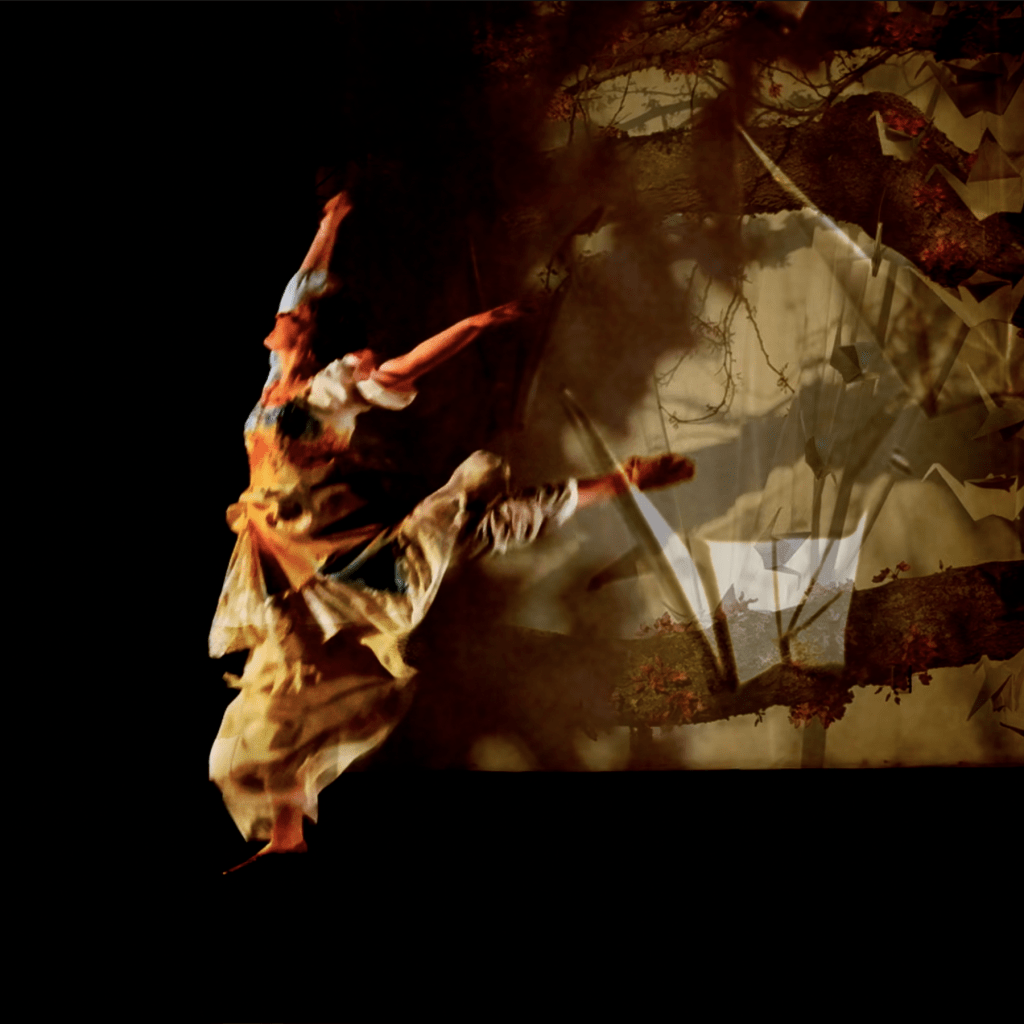
The Moon-dancer: Waxing Gibbous

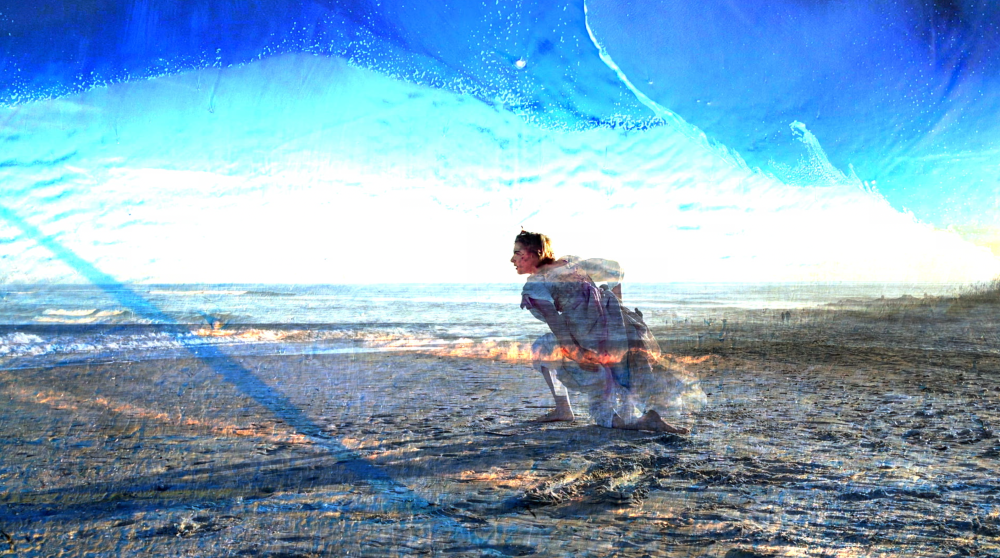
“‘Here it is,’ he said, and waved his hands towards the water below. A soft glow shone from the reflections on the lake bathing them all in light. ‘…a Luminous Stone That Lights the Night.’”—When the Sea Turned to Silver, by Grace Lin

K. Partridge: Movement Director
Luscinda L. Dickey: Dancer
Antonel Neculai: Drone Footage
Carrie Leigh Dickey: Costume and Hair, Cinematographer and Video Editor

The Inspiration:

Are we up or down? Here or there? Then or now? Asleep or awake? Conscious or subconscious? Are we really floating somewhere in between? Surrealism is full of questions. The answers always depend on your perspective.

In Grace Lin’s book When the Sea Turned to Silver, Pinmei, the shy grand-daughter of a story teller, and Yishan, a young boy with immortal wisdom, journey to the bottom of the ocean in search of the tear of a goddess: a “Luminous Stone That Lights the Night.” The Sea King takes them across a bridge—one that “…stretched and stretched only to disappear…”

“‘Are we walking over the sea?’ Pinmei asked faintly.

“‘This is the Heavenly Lake,’ the Sea King told her. ‘The immortals of the sky call it the Celestial River and you mortals call it the Starry River, but here we call it the Heavenly Lake. I suppose to us at Sea Bottom, it seems more the size of a lake than a river.’

“‘But the Starry River is in the sky,’ Pinmei said, shaking her head in confusion. ‘It’s up high. This is below!’

“The Sea King nodded. ‘Our worlds connect here,’ he said. ‘The bottom of the Heavenly Lake is your sky.’

“…After another long pause, the Sea King stopped and brought them to the edge of the bridge.

“‘Here it is,’ he said, and waved his hands towards the water below. A soft glow shone from the reflections on the lake bathing them all in light. ‘…a Luminous Stone That Lights the Night.’

Or, Pinmei thought as she stared downward, the moon.”

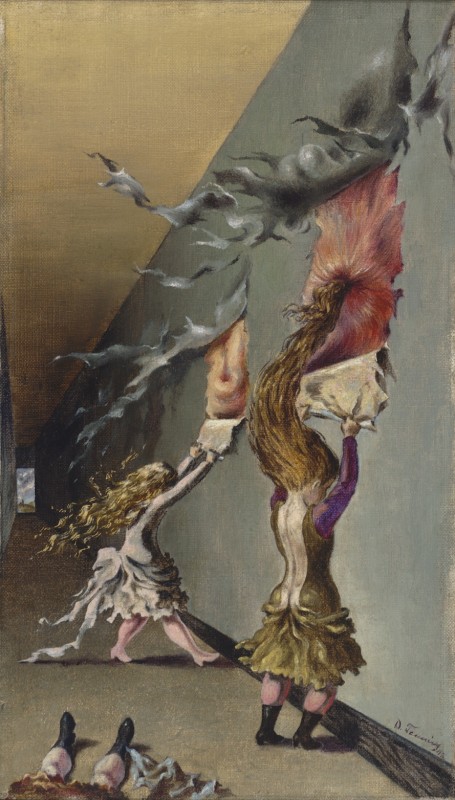
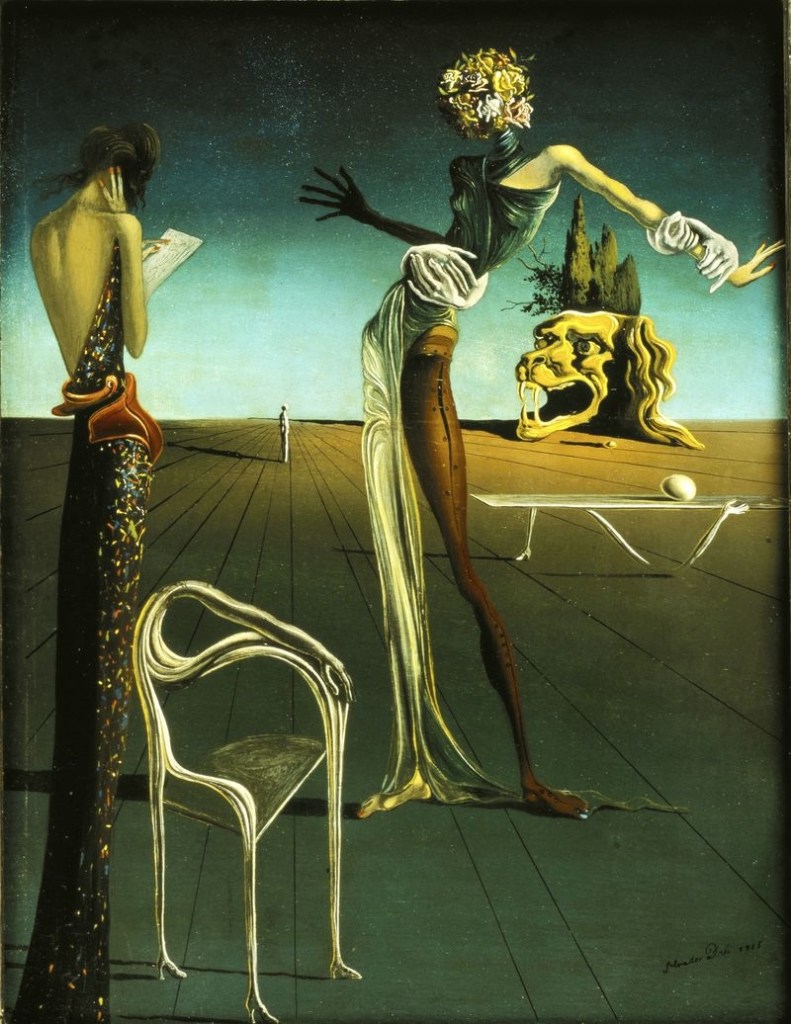
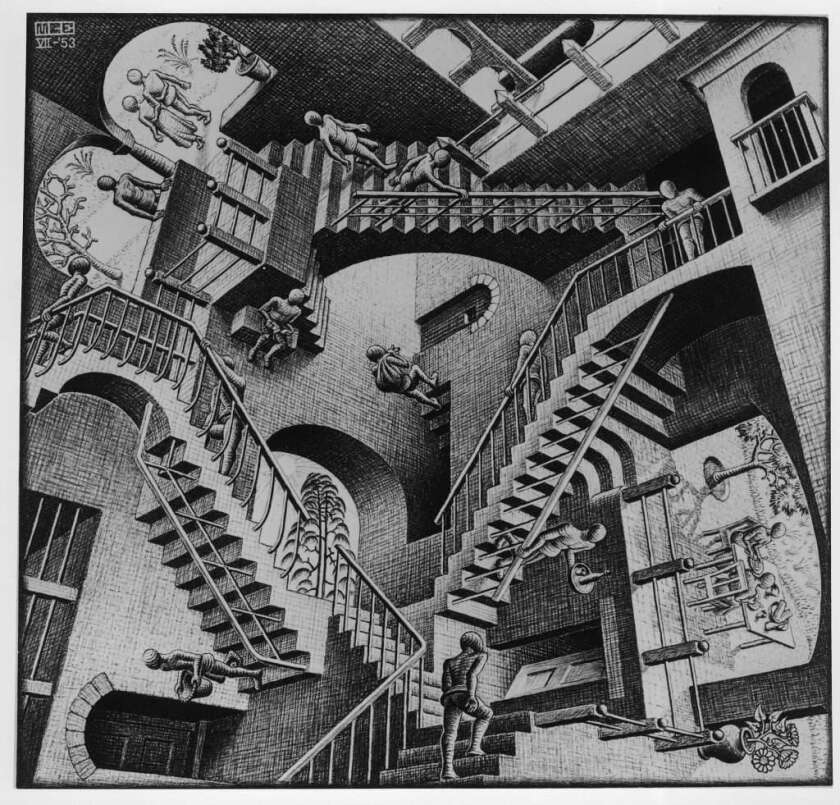
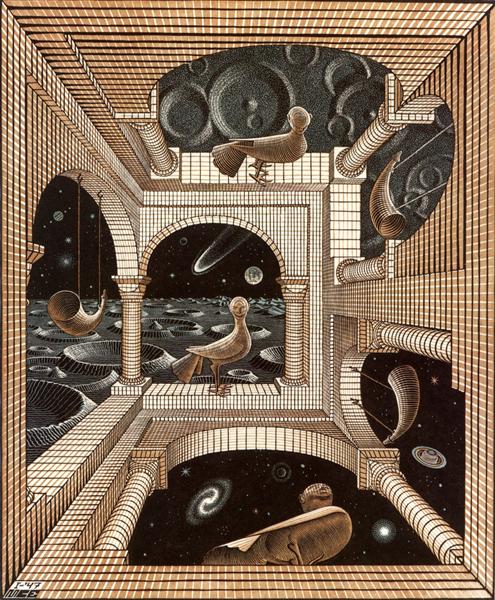
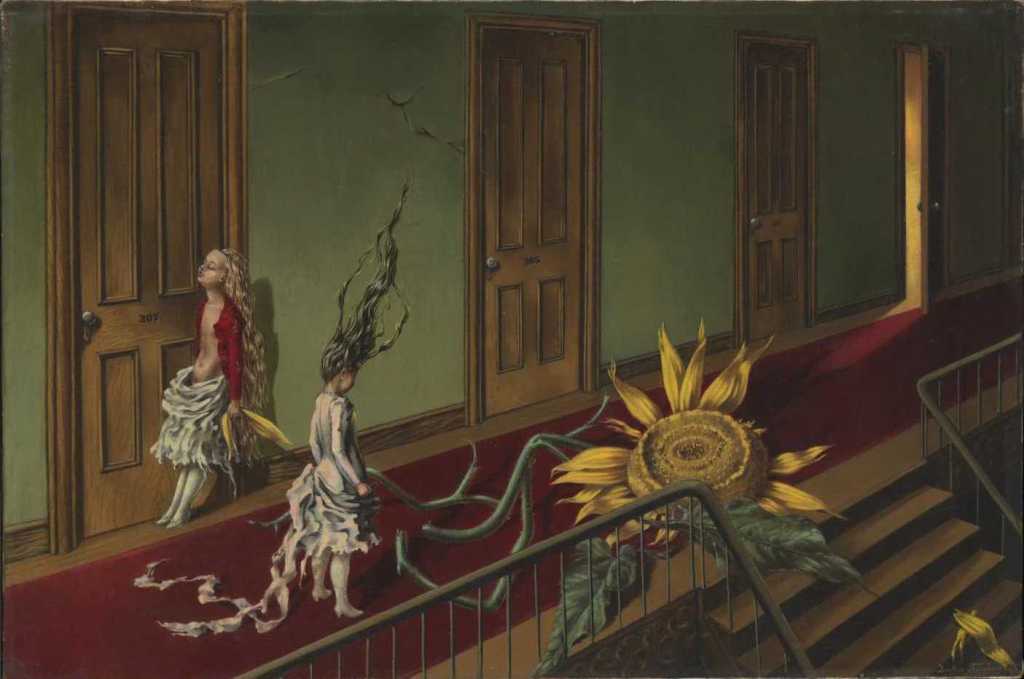
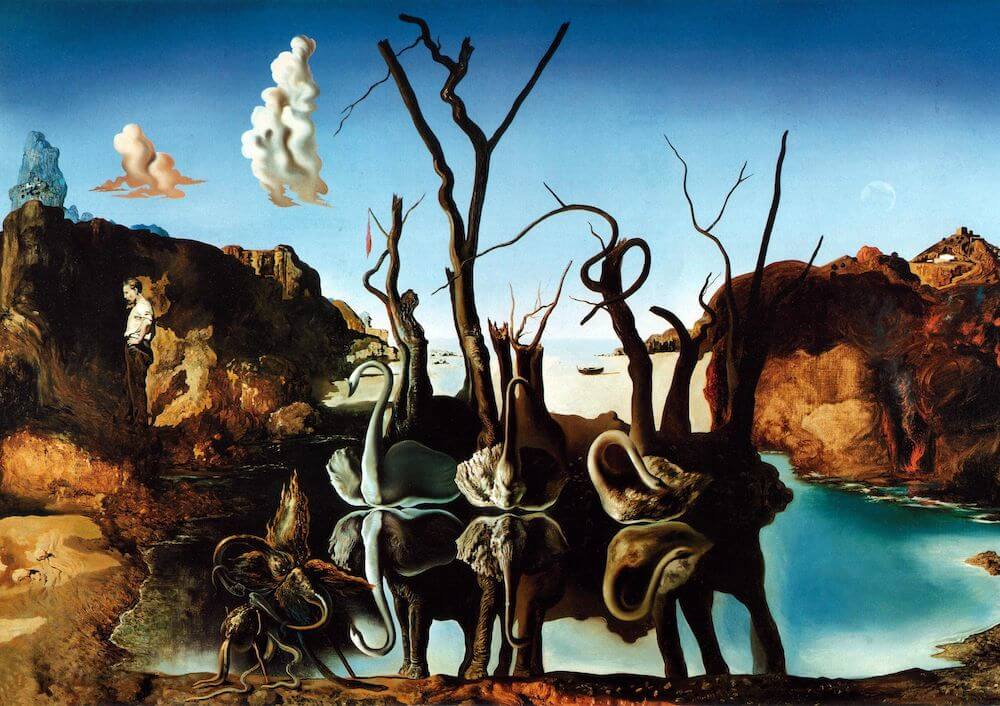
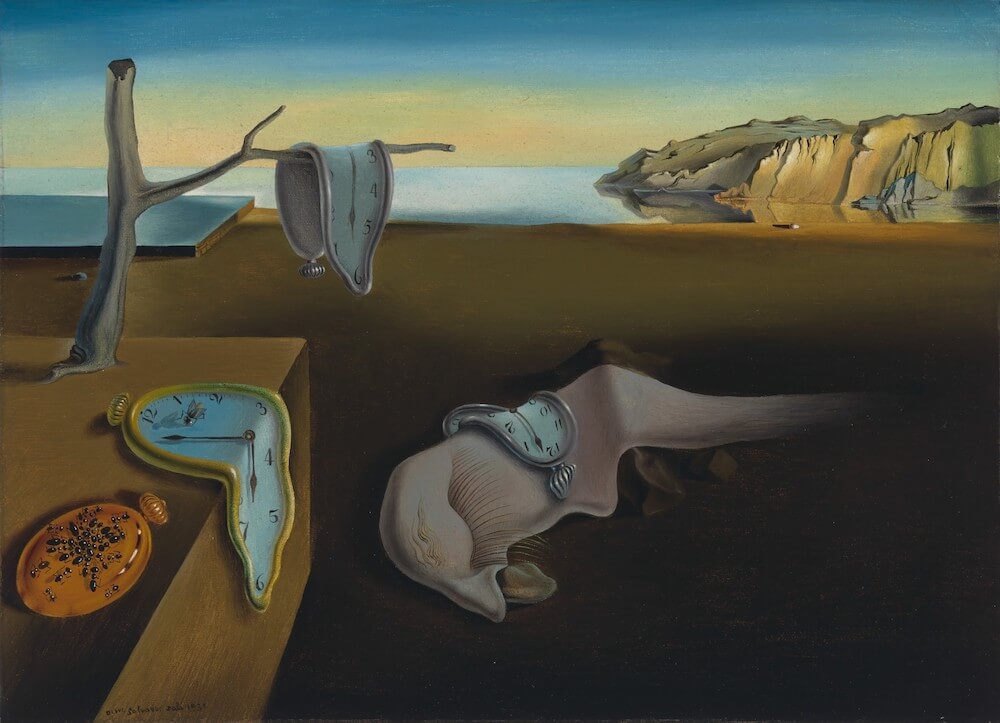
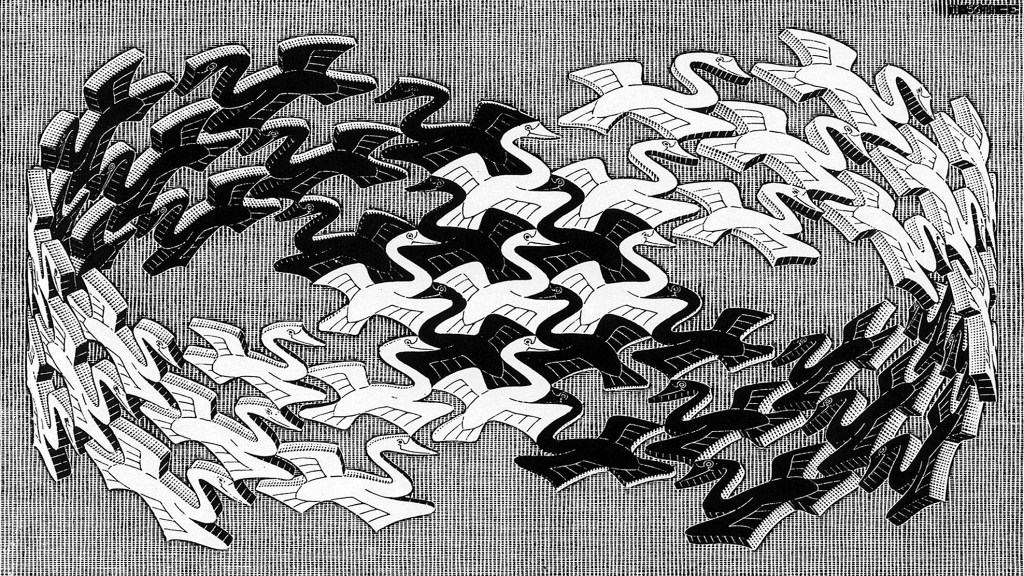
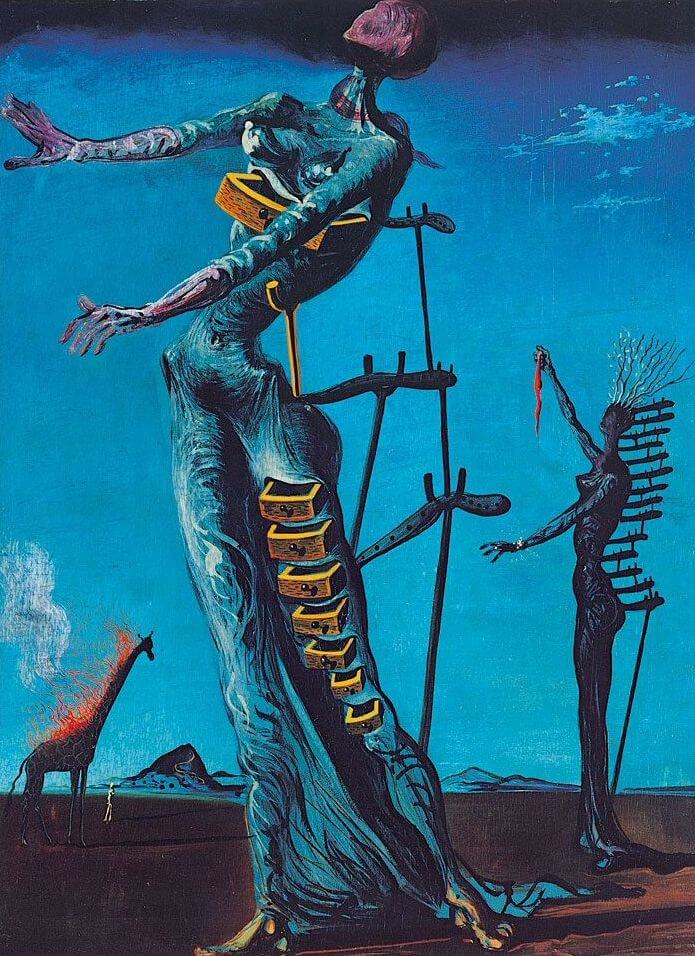
The Moon-dancer: Waxing Gibbous was inspired by the works of Surrealist artists Salvador Dali, M. C. Escher, and Dorothea Tanning.


The Music:
Erik Satie’s Gymnopédie No. 1—Lent et douloureux, as orchestrated by Claude Debussy.

The Composer and the Orchestrater:
After leaving his position at Le Chat Noir, Erik Satie became second pianist at Auberge du Clou. It was there, in 1890, that he first met Claude Debussy. Finding that they shared a passion for experimental composition, the two bohemians struck up a relationship that would last for years. Can you imagine an afternoon at Debussy’s flat—a quirky place, with a balcony only big enough for two or three flower pots, high up in the Paris sky? I can see Debussy perched at his rather out-of-tune old piano and exuberantly playing Satie his newest idea, as the latter leans back in a rickety arm chair while sipping happily on a glass of cheap and slightly dusty wine. It was in 1897 that Debussy, whose popularity was growing as Satie’s was waning, helped put his friend back into the public eye by orchestrating two of the now famous Gymnopédies.

Dance

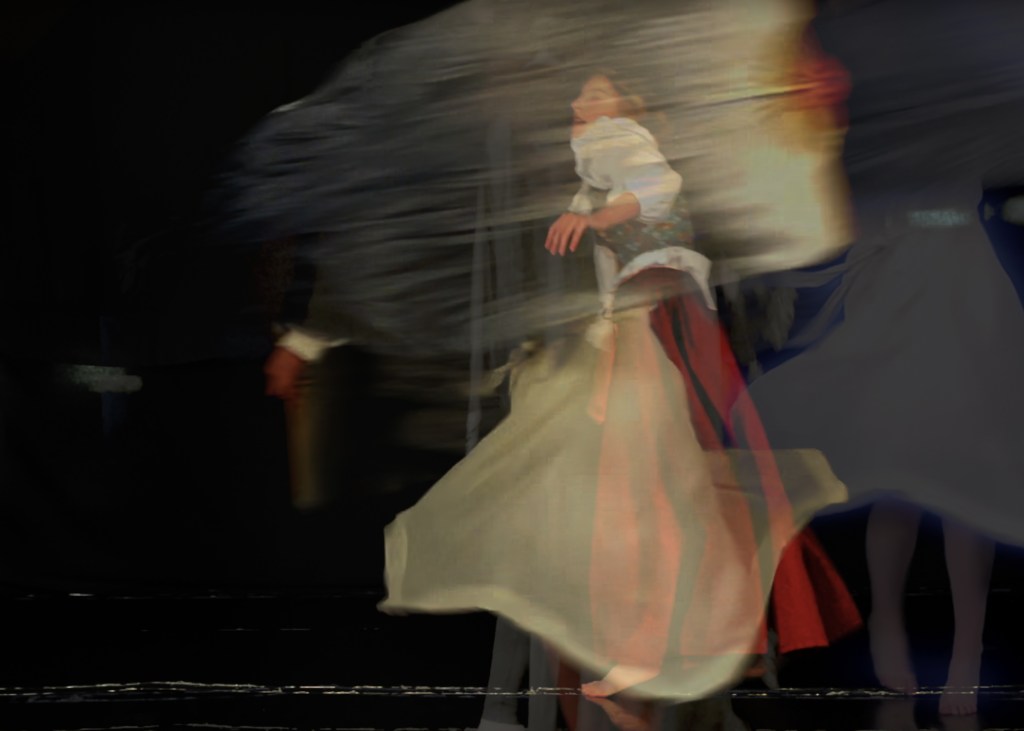
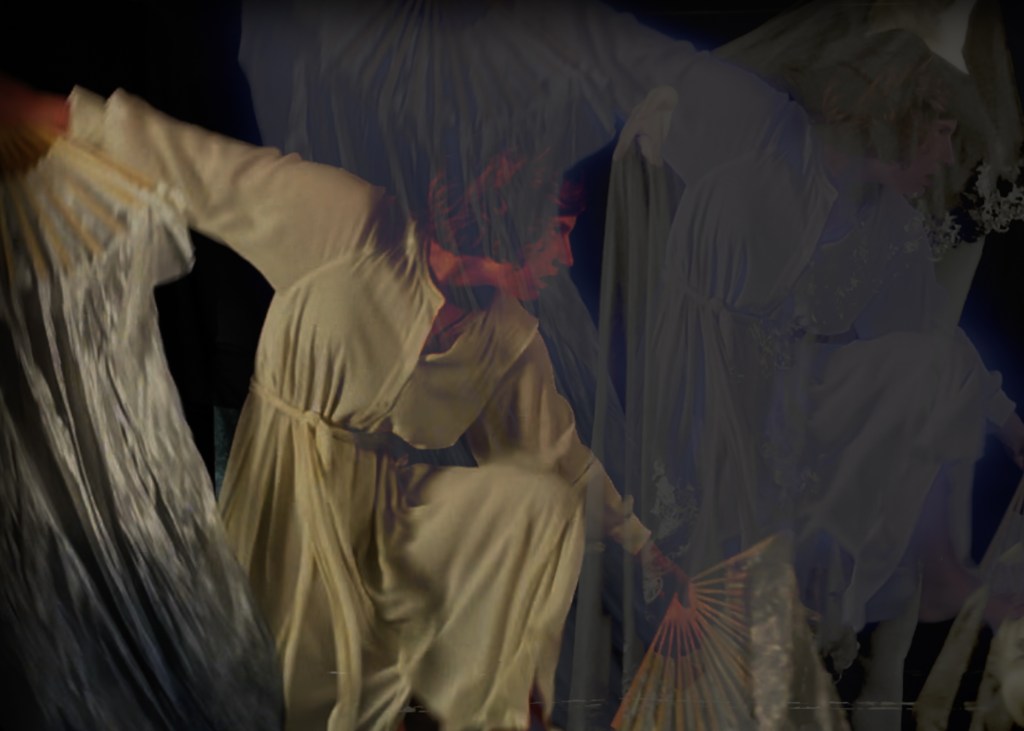
The Moon-dancer: Lunar Eclipse

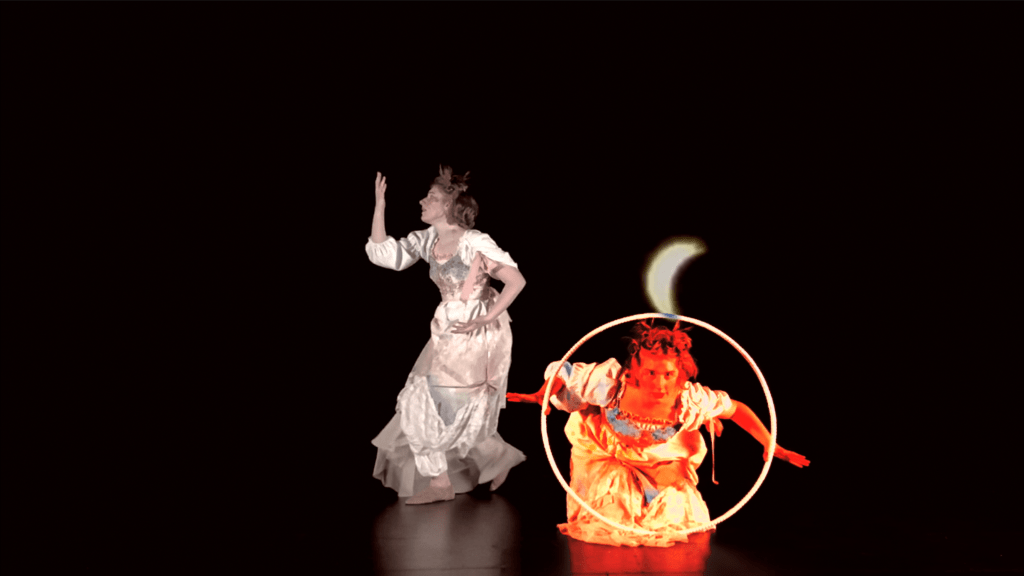
The Tswana people in Africa believe that a lunar eclipse is when a lion blocks the light of the moon with his paw so that he can hunt more successfully.

K. Partridge: Movement Director
Luscinda L. Dickey: Dancer
Carrie Leigh Dickey: Costume and Hair, Cinematographer and Video Editor

The Inspiration:

“I find that unexpected color juxtapositions create a kind of emotional drama—at times harmonious, at others contentious,” writes Mr. Frank Campion, an abstract artist based just outside of Winston-Salem, NC.

This dance was created in response to Mr. Campion’s work. Choreographed with a combination of Afro-Cuban dance—inspired his art’s raw, gritty marks and poured paint, and Fosse influenced jazz—inspired by his art’s bold color and crisp angles, it is meant to embody “…the tension that can exist between logical, deliberate, geometric forms and irrational, accidental painterly incident.”

The Music: 

Erik Satie’s Gnossiennes No. 1

The Composer:

Imagine you could time-travel back to Paris in the late 1800s. It is a late, chilly, fall evening in Montmartre. You are strolling along the Boulevard towards the glowing windows of Le Chat Noir cabaret. You slip in the door through a crowd of Club des Hydropathes members, squeeze behind a corner table, and order your favorite drink.

Many voices talk at once over the piano music—about poetry, painting, the theatre, bohemian society. No one pays much attention to the pianist, but you hang onto every chord he plays. This eccentric looking young man in a black frock coat is Erik Satie: a composer who broke the boundaries of music as it was known and went on to help inspire a new generation of composers.

Satie sways softly to the repetitive beat of his tune. He doesn’t look down at his hands, but straight in-front of himself as if seeing the dream-scape of sound he creates—measuring each note. When the piece is finished, you jump up and make your way to the piano. “Monsieur Satie, what a beautiful piece of music!” you cry in your very best French, “What is it called?” Satie turns towards you adjusting his spectacles. “A Gnossiennes,” he says. “And what exactly is a Gnossiennes?” you ask breathlessly. Satie pauses. You catch a slight twinkle in his eye. “A Gnossiennes,” he says very slowly, “is what I just played.” And turning back to the piano, he begins to play once more.

Dance

The Moon-dancer

What is “The Moon-dancer”?

The Moon-dancer is an ongoing series of dances and dance short films inspired by the phases, symbolisms, and moods of Earth’s moon which seeks to bring art, music, and written word to life through movement.

Since its conception in 2021, when I first danced to Claude Debussy’s “Clair de lune,” I have had the delight to share The Moon-dancer at studio recitals and community gatherings around my home state of North Carolina. These dances juxtapose unique styles—from ballet-inspired interpretive dance to tap and jazz—against unexpected works of music from the late 19th through mid-20th centuries. This series is a visual and audial scrapbook of my discoveries, musings, and fascinations; and it serves as a filmed documentation of my technical and artistic development.

A Note on the Music:

The late 19th through mid-20th centuries were times of artistic revolution—and times I find to be particularly fascinating! Visual art broke from photorealism; written word and theatre ventured into new realms of expression; and music followed suite as composers rebelled against classical “perfection” and reinvented what “classical” meant.

These composers explored varying levels of dissonance, atonalism, minimalism, wandering melodies, and vicious repetition. Scott Joplin introduced speedy, passionate ragtime to classical structure; George Gershwin brought the rollicking fire of jazz to the concert hall. Claude Debussy mastered luminous, rule defying Impressionism; Arnold Schonberg crafted new rules for his spiky 12-tone system.

We too are in time of revolution. Today, the “new” rules and standards have become the old ones to be broken, challenged, and explored anew. I believe it is easy to forget how relevant and thrilling the music of the late 19th through mid-20th centuries really is—to merely see it as part of our “Relaxing Classics” playlist, or of our strange, out-of-reach concert repertoire. My goal is to present a selection of these works in new, surprising, and inspiring ways through The Moon-dancer.

Our Look:

Every dance is filmed in a specific, thoughtfully picked place. So far, we have visited locations as diverse as fine art galleries and beaches. Dances such as “The Moon-dancer: First Quarter” include intricate layering of separately filmed b-roll. In “The Moon-dancer: Solar Eclipse” I even have the chance to dance with myself! We are always trying to push our skills and vision just a little farther! The Moon-dancer’s costume, hair, and make-up was created by artist Carrie Leigh Dickey (who also happens to be my wonderful mom!). She also serves as chief editor and postproduction guru (AKA, the incredible woman who listens to my and my dance instructor’s wild ideas and does not think we are too insane!).

People Who Make the Magic:

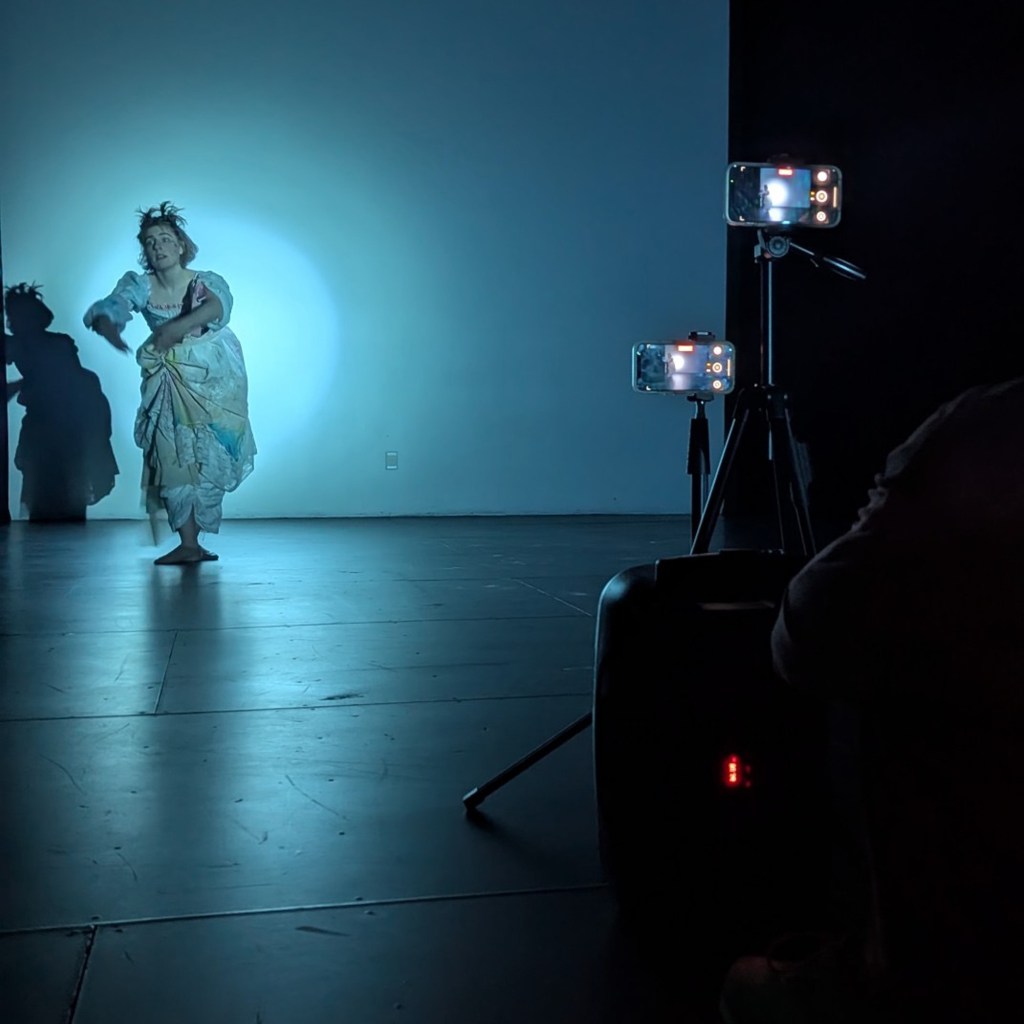
The Moon-dancer would never be possible without the guidance of my dance instructor, K. Partridge of Juxtaposition Fine Arts. Ms. K. is my mentor, co-choreographer, and conspirator! She along with my mother—Carrie—and Luke Dickey—my awesome dad!—plus several of our amazing, daring friends are the forces responsible for capturing these dances on camera. Together, we have flown drones over Shell Island (and rescued that sound speaker from Impending Doom by Wave), fastened innumerable origami cranes to a tree in a Spring windstorm (not to mention the backdrop that almost blew away), and jimmy-rigged a portable spotlight with tape—praying it wouldn’t slowly sink down the wall into oblivion. I believe the results of these collaborative endeavors are truly touched by magic!

Reflections

In the Oculus

K. Partridge: Movement Director
Luscinda L. Dickey: Choreographer, Musical Composition, Dancer
Carrie Leigh Dickey: Costumes and Hair, Cinematographer and Video Editor

THE PROCESS

Back in late summer of 2021, my dance teacher and I were trying to come up with a concept for our next dance: something different that would push the boundaries of what I had done before. 

I had meanwhile been playing around with a melody on the piano. The melody had evolved into the beginnings of a song. That’s when the idea hit: what would happen if we completely flipped the way that most dances were choreographed and, instead choreographing a dance to a piece of music, I wrote the music to a dance? 


“In the Oculus” from 2021: One of my first ever compositions for piano.

The dance itself, we decided, would be inspired by a piece of artwork that I had loved ever since I’d first seen it: John Coyne’s “Oculus, 2021.” The watercolor shows a table and a chair in the middle of an otherwise empty oculus. What was a seemingly broken chair doing in that massive oculus? What could be lingering in those strange shadows and that black doorway? What story could have taken place there? 

This mysterious room was like the Hall of Charn in C. S. Lewis’ “The Magician’s Nephew” with its empty courtyards, yawning arches, curious light, and frozen figures. I worked to turn my thoughts into movement, and one month later, I had about two minutes of choreography. At that point, the dance was about a Girl who wanders into the oculus and encounters a dark enchantment that holds everyone in it captive. But as beautiful as the dance was, I still felt like something was missing. It wasn’t enough to know that The Girl was encountering an enchantment, we needed to see the enchantment itself. 

It was then that I decided to split the dance into two parts giving one to The Girl and the other to a new character: The Witch, who embodies the room’s enchantment.

But why just have two characters when we could tell the story even better with three? Inspired by the shapes in the painting’s darkness and that looming, black doorway, I created the character of The Shadow. 

THE OUTCOME

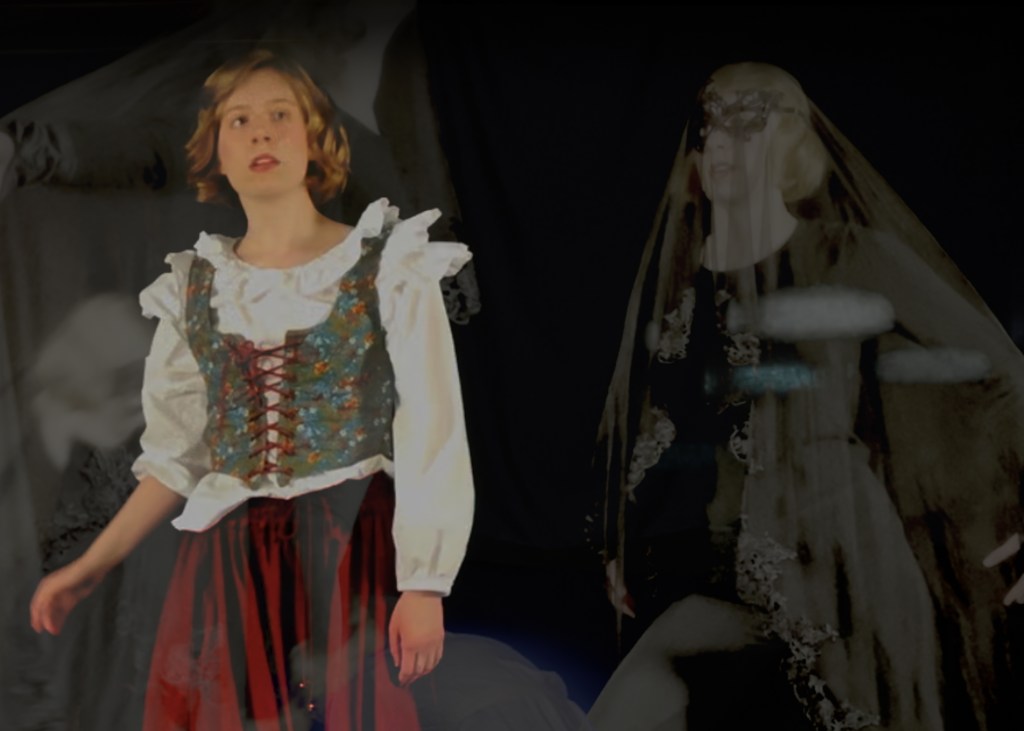
“In the Oculus” is the story of The Witch, The Shadow, and The Girl. The Witch is a dangerous and evil Queen. She has the strength and the magic of many women. The Shadow is The Witch’s minion. Tortured and in constant agony, she embodies the spirits of those who have fallen under the Witch’s enchantment. The Girl is a normal, everyday person who has wandered in The Witch’s oculus and finds that she has more power than she ever knew. The music gives each character a distinct voice.

2025 REFLECTIONS ON THIS DANCE

I am sitting here writing this note to you on December 4th, 2025—nearly four years after first writing this post—WOW!! How amazing it is to look back at “In the Oculus” and its music and see seeds of the future that I didn’t even know were there! The story-telling choreography, layered characters, and dense imagery of “In the Oculus” was a first peek into The Moon-dancer, while my song on the piano was my very first composing adventure. Isn’t that wild?? Remember, maybe that wacky, boundary-pushing, experimental project buzzing gleefully in your brain is a foretelling seed of your future too! — Much love, Luscinda

Interviews

Concept, Dynamics, Finesse, and Passion: A delve behind the screen with Erinn Dearth and Dan Beckmann

Special Report by Journalist Luscinda L. Dickey

A mysterious alien called Flogg has taken control of the earth. All human beings find themselves held captive in their own homes. As the lock-in takes over, suddenly nothing is the way it seems. And what will happen next? Only Erinn Dearth and Dan Beckmann know.

“…We knew we wanted to keep the Spring Theatre community together working on a project,” says Erinn Dearth, the Executive Director of Spring Theatre, “Especially with all of the new uncertainty that was happening at the world. So, we decided to do a Digital Performance Project and structure our writing of the project very much like we have done with our Christmas show each year at Spring—writing the story around the talents of the folks who want to participate. We had no idea we would get so many! Coming up with the storyline was crazy. We knew about 3/4 of the performers already, and got to know the entire company during our recording of the Alex Boyé song “Lemonade” which we used as an introduction to the Project and to our cast. After that, we literally took 100 tiny sticky notes with each actor’s name on it and put them all over a white board with potential roles for them.”

In the words of Dan Beckmann, the theatre’s Artistic Director, “The writing process was similar to how Erinn and I wrote Holly Jolliday…We eventually arrived at this alien concept which turned out to be the perfect blend for completely outside the realm of realism and a very close comparison to what people were going through…And then the script-writing came.”

“…I would go through and speed write the scenes,” says Dearth, “And Dan would come after me and clean up, finesse, or sometimes completely rewrite the scenes.”

“ …We had a timeline of events that we tried to connect completely through what I call the “rope” concept…linking everyone and everything together in the universe through a television, phone, or radio.” Beckmann tells, “The challenge with the script was to sculpt these 100 characters into distinct people and give them distinct voices and of course to make them all feel relevant and important to the storytelling.”

As Dearth muses, “Our work flow is best as we say when I ‘splash the paint’ and get something on paper, and Dan comes after me to make it into a beautiful or absurd painting.”

With the storyline set, the scenes written, and the finished videography back in the directors hands, the ball of making a movie out of bunches of clips begins to roll. So what is key to the finished product? Editing.

“One of the cool things about the editing process,” shares Beckmann, “Is that it has been that similar to molding characters around people, I’ve been molding the editing around the performance—so each of the characters and scenes has a distinct editing voice, which both lends itself to the tone of the show (being recorded from over 70 different households), and also supports the performances of the actors therein.” He chuckles, “The whole thing has been such a whirlwind that I don’t have a very distinct memory in time when it started. Suddenly, I woke up one morning and we were doing a feature film with 100 people alongside us. And now here I am…50 hours into editing with only a scratch off of the surface of the final product. It’s massive but amazing.”

The world is filled with aspiring play writes, screenwriters, and authors. But when uncertainty pops in, many would shy away from such big and amazing endeavors as Erinn Dearth and Dan Beckmann have tackled.

“Never doubt yourself!” Dearth encourages, “I think that there are so many genius people out there who don’t put their work out there due to overthinking or fearing starting a project. I believe that everyone has a story to tell and the world is always in need of new perspectives and art…so truly, just do it!”

“DON’T DO IT!” Beckmann laughs, “Kidding. Call upon your experience and listen to your gut. Base your characters on real people, because it gives them more tangibility and makes writing them—the actual dialogue that is—more dynamic, specific, and more fun and easy to write.”

Dearth smiles. “Put yourself out there and don’t be afraid of rejection or judgment. So much of the world is an awesome accepting place that wants to hear from YOU!”

Beckmann agrees, “Another thing I’d like to convey is that this project is SO weird and new, that I have been living in a world that is completely improvisational and whirlwind-like, but it’s absolutely 100 percent affirmed to me that if you have an idea, and you’re feeling creative, you should just jump…because doing so can make pure magic.”

Spring Theatre’s Digital Performance Project will proudly present: Lock-In, a full lengh feature film on Friday, May 29, 2020 at 8PM EDT on Spring Theatre’s YouTube page.

www.SpringTheatre.org

UPDATE FROM 2025

Has it truly been over five years since “Lock-In”?!? What an experience this project was! If you would like to watch “Lock-In” (in all it’s glorious 2 hours and 40 minutes), here is your link. I first appear—with my lovely Mama—at 19:09. (And yes, I am working on a masterpiece: “The Scream,” paint by number.) —Luscinda