Dance

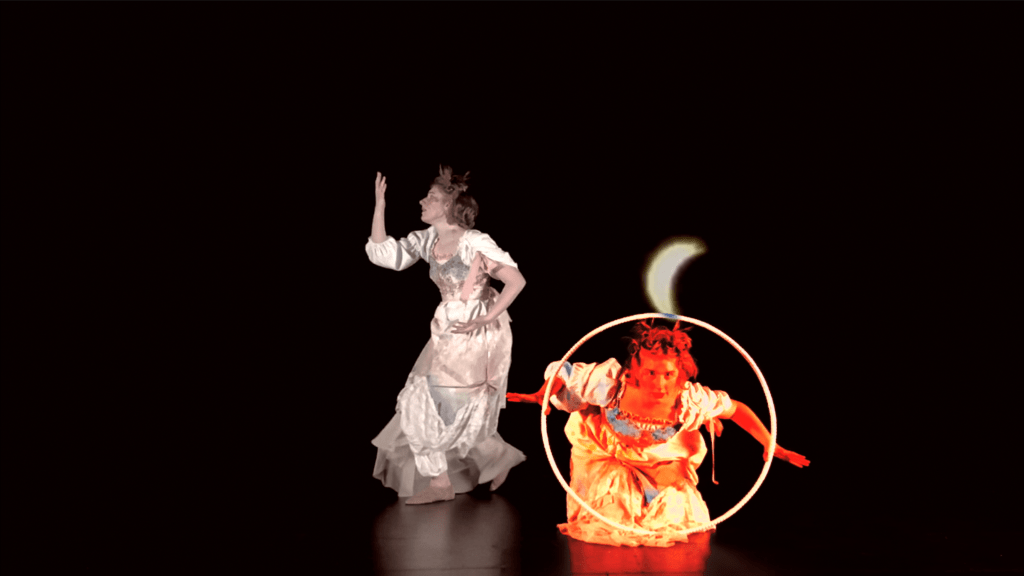
The Moon-dancer: Lunar Eclipse

The Tswana people in Africa believe that a lunar eclipse is when a lion blocks the light of the moon with his paw so that he can hunt more successfully.

K. Partridge: Movement Director
Luscinda L. Dickey: Dancer
Carrie Leigh Dickey: Costume and Hair, Cinematographer and Video Editor

The Inspiration:

“I find that unexpected color juxtapositions create a kind of emotional drama—at times harmonious, at others contentious,” writes Mr. Frank Campion, an abstract artist based just outside of Winston-Salem, NC.

This dance was created in response to Mr. Campion’s work. Choreographed with a combination of Afro-Cuban dance—inspired his art’s raw, gritty marks and poured paint, and Fosse influenced jazz—inspired by his art’s bold color and crisp angles, it is meant to embody “…the tension that can exist between logical, deliberate, geometric forms and irrational, accidental painterly incident.”

The Music: 

Erik Satie’s Gnossiennes No. 1

The Composer:

Imagine you could time-travel back to Paris in the late 1800s. It is a late, chilly, fall evening in Montmartre. You are strolling along the Boulevard towards the glowing windows of Le Chat Noir cabaret. You slip in the door through a crowd of Club des Hydropathes members, squeeze behind a corner table, and order your favorite drink.

Many voices talk at once over the piano music—about poetry, painting, the theatre, bohemian society. No one pays much attention to the pianist, but you hang onto every chord he plays. This eccentric looking young man in a black frock coat is Erik Satie: a composer who broke the boundaries of music as it was known and went on to help inspire a new generation of composers.

Satie sways softly to the repetitive beat of his tune. He doesn’t look down at his hands, but straight in-front of himself as if seeing the dream-scape of sound he creates—measuring each note. When the piece is finished, you jump up and make your way to the piano. “Monsieur Satie, what a beautiful piece of music!” you cry in your very best French, “What is it called?” Satie turns towards you adjusting his spectacles. “A Gnossiennes,” he says. “And what exactly is a Gnossiennes?” you ask breathlessly. Satie pauses. You catch a slight twinkle in his eye. “A Gnossiennes,” he says very slowly, “is what I just played.” And turning back to the piano, he begins to play once more.
Dance

The Moon-dancer

What is “The Moon-dancer”?

The Moon-dancer is an ongoing series of dances and dance short films inspired by the phases, symbolisms, and moods of Earth’s moon which seeks to bring art, music, and written word to life through movement.

Since its conception in 2021, when I first danced to Claude Debussy’s “Clair de lune,” I have had the delight to share The Moon-dancer at studio recitals and community gatherings around my home state of North Carolina. These dances juxtapose unique styles—from ballet-inspired interpretive dance to tap and jazz—against unexpected works of music from the late 19th through mid-20th centuries. This series is a visual and audial scrapbook of my discoveries, musings, and fascinations; and it serves as a filmed documentation of my technical and artistic development.

A Note on the Music:

The late 19th through mid-20th centuries were times of artistic revolution—and times I find to be particularly fascinating! Visual art broke from photorealism; written word and theatre ventured into new realms of expression; and music followed suite as composers rebelled against classical “perfection” and reinvented what “classical” meant.

These composers explored varying levels of dissonance, atonalism, minimalism, wandering melodies, and vicious repetition. Scott Joplin introduced speedy, passionate ragtime to classical structure; George Gershwin brought the rollicking fire of jazz to the concert hall. Claude Debussy mastered luminous, rule defying Impressionism; Arnold Schonberg crafted new rules for his spiky 12-tone system.

We too are in time of revolution. Today, the “new” rules and standards have become the old ones to be broken, challenged, and explored anew. I believe it is easy to forget how relevant and thrilling the music of the late 19th through mid-20th centuries really is—to merely see it as part of our “Relaxing Classics” playlist, or of our strange, out-of-reach concert repertoire. My goal is to present a selection of these works in new, surprising, and inspiring ways through The Moon-dancer.

Our Look:

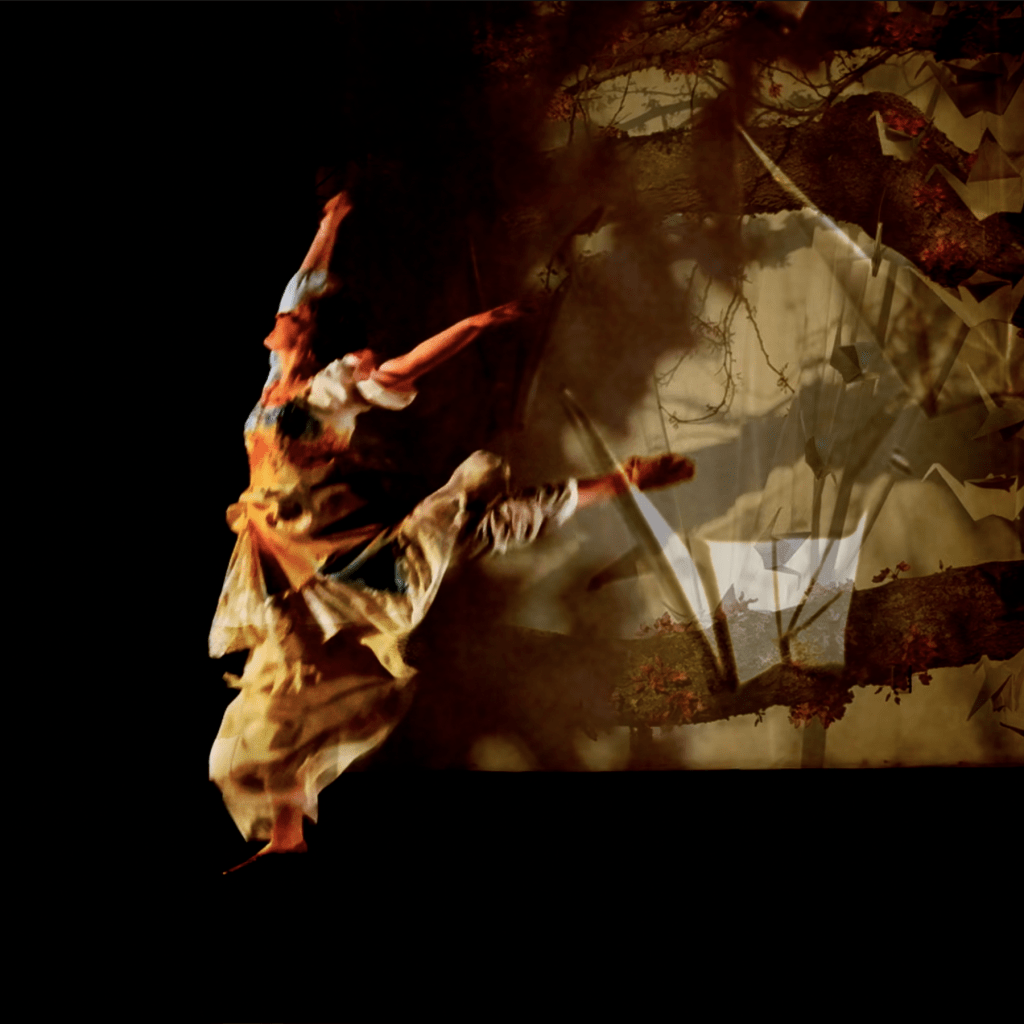
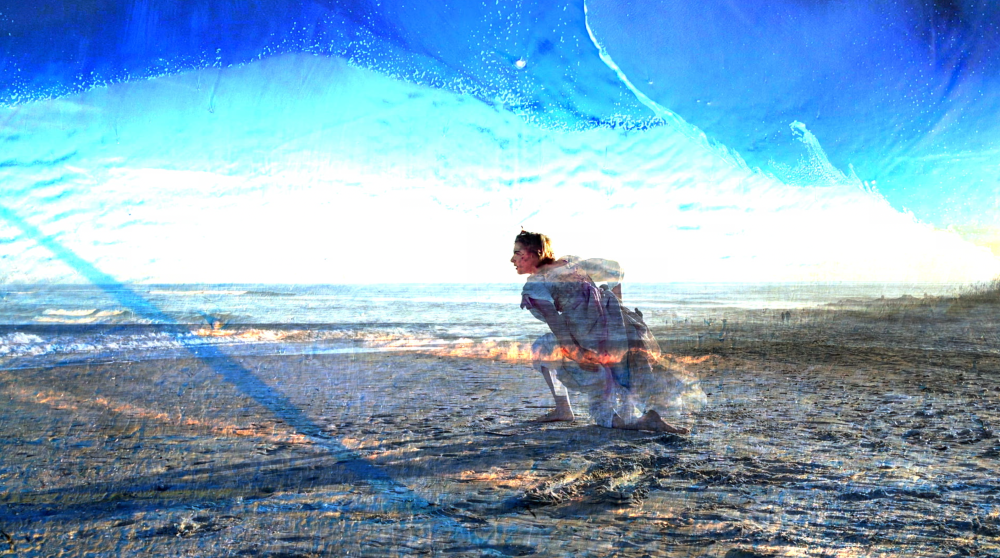
Every dance is filmed in a specific, thoughtfully picked place. So far, we have visited locations as diverse as fine art galleries and beaches. Dances such as “The Moon-dancer: First Quarter” include intricate layering of separately filmed b-roll. In “The Moon-dancer: Solar Eclipse” I even have the chance to dance with myself! We are always trying to push our skills and vision just a little farther! The Moon-dancer’s costume, hair, and make-up was created by artist Carrie Leigh Dickey (who also happens to be my wonderful mom!). She also serves as chief editor and postproduction guru (AKA, the incredible woman who listens to my and my dance instructor’s wild ideas and does not think we are too insane!).

People Who Make the Magic:

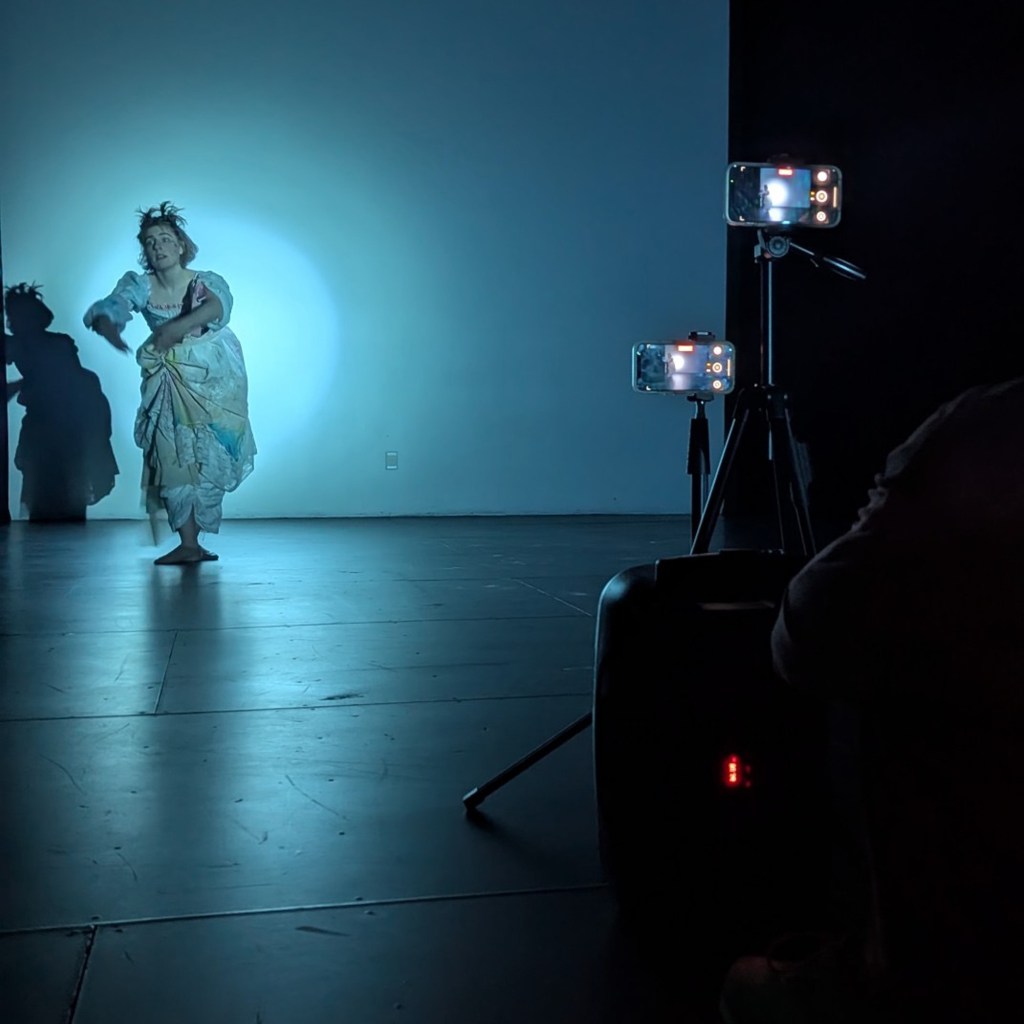
The Moon-dancer would never be possible without the guidance of my dance instructor, K. Partridge of Juxtaposition Fine Arts. Ms. K. is my mentor, co-choreographer, and conspirator! She along with my mother—Carrie—and Luke Dickey—my awesome dad!—plus several of our amazing, daring friends are the forces responsible for capturing these dances on camera. Together, we have flown drones over Shell Island (and rescued that sound speaker from Impending Doom by Wave), fastened innumerable origami cranes to a tree in a Spring windstorm (not to mention the backdrop that almost blew away), and jimmy-rigged a portable spotlight with tape—praying it wouldn’t slowly sink down the wall into oblivion. I believe the results of these collaborative endeavors are truly touched by magic!